CNC işlenmiş bir parçanın yüksek sıcaklık altında mukavemetini, boyutlarını, korozyon direncini veya elektriksel performansını koruması gerektiğinde ısıya dayanıklı malzemeler seçilir. Bu uygulamalarda, yanlış malzeme seçimi termal deformasyona, sürünmeye, oksidasyona, kimyasal saldırıya, erken aşınmaya veya parçanın tamamen arızalanmasına yol açabilir. Buradaki zorluk, yüksek sıcaklık performansının kararın sadece bir parçası olmasıdır. Aynı malzeme seçimi, işleme maliyetini, takım aşınmasını, teslim süresini, yüzey kalitesini ve muayene gereksinimlerini de etkiler.
Bu kılavuz, CNC işleme için yaygın olarak kullanılan dört ısıya dayanıklı malzemeyi karşılaştırmaktadır: titanyum, Inconel, PEEK ve PPS. Bunları basit bir malzeme listesi olarak ele almak yerine, çalışma sıcaklığı, yük, ağırlık, kimyasal maruziyet, yalıtım gereksinimleri, işleme zorluğu ve bütçeye bağlı olarak yüksek sıcaklık metalleri ve mühendislik plastikleri arasında nasıl seçim yapılacağını açıklamaktadır. Metaller ve plastikler hakkında daha geniş bir genel bakış için CNC işleme malzemeleri kılavuzumuza bakın . Bir CNC işleme teklifi hazırlıyorsanız, bu karşılaştırma CAD dosyalarınızı ve çizimlerinizi göndermeden önce doğru malzemeyi belirlemenize yardımcı olabilir.
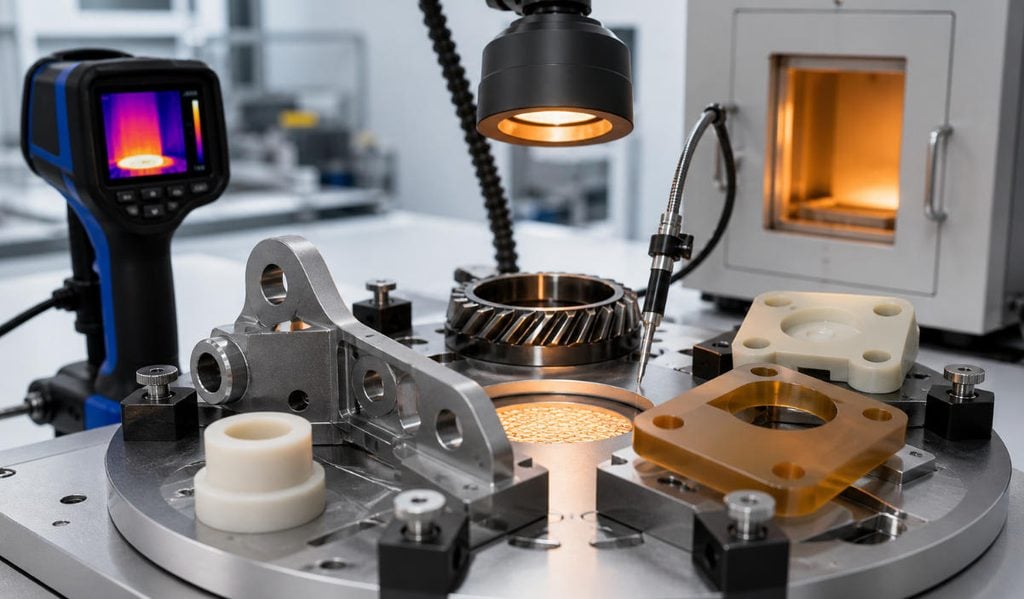
CNC İşlemede Kullanılan Isıya Dayanıklı Malzemelerin Hızlı Karşılaştırması
| Malzeme | En | Ana avantaj | Ana Sınırlama | Maliyet Seviyesi |
|---|---|---|---|---|
| Titanyum | Hafif, yüksek mukavemetli parçalar | Güçlü, korozyona dayanıklı, çelikten daha düşük yoğunluklu. | İşlenmesi zor, ısı dağılımı zayıf. | Yüksek |
| Inconel | Aşırı sıcaklık ve zorlu ortamlar | Çok yüksek sıcaklıklarda bile dayanıklılığını korur. | Makineyle işlenmesi çok zor ve pahalı. | Çok Yüksek |
| DİKİZLEMEK | Yüksek sıcaklığa dayanıklı plastik parçalar | Hafif, kimyasallara dayanıklı, yalıtımlı, bir plastik için oldukça sağlam. | Pahalı, dikkatli işleme ve gerilim kontrolü gerektiriyor. | Yüksek |
| PPS | Maliyet hassasiyeti yüksek yüksek sıcaklık plastik parçaları | İyi kimyasal direnç, boyutsal kararlılık, PEEK'e göre daha düşük maliyet. | PEEK'e göre daha düşük dayanıklılık ve performans sınırı. | Orta Yüksek |
Asıl soru, hangi malzemenin en yüksek sıcaklık dayanımına sahip olduğu değil. Daha doğru soru, hangi malzemenin en düşük güvenilir toplam maliyetle gerçek hizmet ortamında dayanabileceğidir. Mukavemet ve ağırlığın önemli olduğu durumlarda titanyum ideal olabilir. Aşırı ısı, yanma veya agresif kimyasal koşullar için Inconel gerekli olabilir. Yalıtım, kimyasal direnç ve düşük ağırlık gerektiğinde PEEK metalin yerini alabilir. Ortam zorlu olduğunda ancak PEEK veya Inconel'i haklı çıkarmadığında PPS daha iyi bir değer olabilir.
Gerçek Çalışma Sıcaklığı ile başlayın.
Sıcaklık seçimi, yalnızca veri sayfasında belirtilen maksimum sıcaklıkla değil, gerçek çalışma koşullarıyla başlamalıdır. Mühendisler, sürekli çalışma sıcaklığını kısa süreli tepe sıcaklığından ayırmalıdır. Kısa süreli bir ısı artışına dayanabilen bir malzeme, aynı sıcaklıkta uzun süreli yüke uygun olmayabilir. Stres, basınç, titreşim, nem, kimyasallar ve termal döngü, pratik performansı düşürebilir.
Titanyum alaşımları genellikle orta derecede yüksek sıcaklık dayanımının, mukavemet, korozyon direnci ve düşük ağırlıkla birleştirilmesi gereken yerlerde kullanılır. Inconel ise parçanın çok daha yüksek sıcaklıklarda mukavemet ve oksidasyon direncini koruması gerektiğinde kullanılır. PEEK ve PPS yüksek performanslı plastiklerdir, ancak parçanın üst sıcaklık aralığına yakın bir yük taşıması durumunda dikkatlice değerlendirilmelidirler. Plastikler, kimyasal olarak kararlı kalsalar bile, ısı ve gerilim altında yumuşayabilir, deformasyona uğrayabilir veya boyut değiştirebilirler.
CNC İşleme için Titanyum
Titanyum CNC işleme, yüksek mukavemet-ağırlık oranı, korozyon direnci, yorulma direnci ve zorlu ortamlarda güvenilir performans gerektiren parçalar için güçlü bir tercihtir. Havacılık braketleri, tıbbi bileşenler, denizcilik donanımı, motor sporları parçaları, kimyasal işleme bileşenleri ve hafif yapısal parçalar için yaygın olarak kullanılır. Titanyum kolay veya ucuz olduğu için seçilmez. Alüminyum yeterince güçlü olmadığında, paslanmaz çelik çok ağır olduğunda veya korozyon direnci kritik olduğunda tercih edilir.
En büyük işleme zorluğu ısıdır. Titanyum düşük ısı iletkenliğine sahip olduğundan, ısı talaşa doğru hareket etmek yerine kesici kenara yakın kalma eğilimindedir. Bu durum takım aşınmasını hızlandırabilir ve kötü yüzey kalitesi veya boyutsal sapma riskini artırabilir. Titanyum ayrıca sağlam iş parçası tutma, keskin takımlar, kontrollü kesme parametreleri ve etkili bir soğutucu gerektirir.
Titanyum, hafiflik, mukavemet ve korozyon direnci gerektiren hassas parçalar için uygundur. Parçanın tamamen maliyet odaklı olduğu veya paslanmaz çeliğin aynı gereksinimleri daha düşük maliyetle karşılayabildiği durumlarda daha az uygundur. Titanyum CNC fiyat teklifi almak için, tam alaşım sınıfını, ısıl işlem koşulunu, toleransları, kritik yüzeyleri ve muayene gereksinimlerini belirtin.
CNC İşleme için Inconel
Inconel, aşırı ısı, oksidasyon, basınç veya aşındırıcı ortamlarda performans göstermesi gereken parçalarda kullanılan nikel bazlı bir süper alaşımdır. Havacılıkta CNC işleme , türbinler, egzoz sistemleri, enerji ekipmanları, kimyasal işleme, vanalar, bağlantı elemanları ve yüksek sıcaklık takımlarında yaygın olarak kullanılır. Paslanmaz çelik veya titanyumun sıcaklık veya kimyasal maruziyete dayanamadığı durumlarda Inconel doğru seçim olabilir.
CNC işleme açısından bakıldığında, Inconel en zorlu malzeme gruplarından biridir. Sert, ısıya dayanıklı, iş sertleşmesine yatkın ve kesici takımlara karşı aşındırıcıdır. Kesme hızları daha yavaş, takım ömrü daha kısa ve işlem kararlılığı daha önemlidir. Malzemenin kesmeye direnç göstermesi ve ısıyı tutması nedeniyle derin cepler, küçük yarıçaplar, ince duvarlar ve dar toleranslar maliyetli hale gelebilir.
Inconel, parçanın yüksek sıcaklık, oksidasyon, aşındırıcı gazlar veya şiddetli mekanik strese maruz kaldığı durumlarda uygundur. 304 veya 316'nın gereksinimi karşılayabildiği genel paslanmaz çelik uygulamaları için doğru seçim değildir. Fiyat teklifi için Inconel kalitesini, çalışma sıcaklığını, basıncı, aşındırıcı ortamı, yüzey işlemini, muayene standardını ve malzeme sertifikasının gerekli olup olmadığını belirtin.
CNC İşleme için PEEK
PEEK, yüksek sıcaklıkta CNC işlenmiş parçalar için en yetenekli mühendislik plastiklerinden biridir. Isı direnci, kimyasal direnç, düşük ağırlık, elektriksel yalıtım, düşük nem emilimi ve iyi mekanik performans gerektiren parçalar için tercih edilir. Yaygın uygulamalar arasında yarı iletken bileşenler, tıbbi cihaz parçaları, havacılık bileşenleri, pompa ve vana parçaları, elektrik izolatörleri, burçlar, contalar ve analitik cihaz bileşenleri yer almaktadır.
PEEK, elektriksel yalıtım, ağırlık azaltma, kimyasal direnç veya manyetik olmayan davranış önemli olduğunda bazen metalin yerini alabilir. Ayrıca metal korozyonu veya iletkenliğinin sorun yaratacağı uygulamalarda da iyi performans gösterir. Bununla birlikte, PEEK düşük maliyetli bir plastik değildir. Hammadde fiyatı yüksektir ve hassas işleme, gerilim, ısı, sabitleme ve çapak kontrolüne dikkat edilmesini gerektirir.
PEEK, özel özellikleri sayesinde sistem düzeyindeki riski azalttığı yüksek değerli parçalar için uygundur. Daha ucuz bir mühendislik plastiği veya alüminyum aynı gereksinimleri karşılayabiliyorsa, PEEK daha az uygundur. PEEK CNC fiyat teklifi almak için, malzeme kalitesini, çalışma sıcaklığını, yükü, kimyasal maruziyeti, toleransları ve dokümantasyon ihtiyaçlarını belirtin.
CNC İşleme için PPS
PPS, ısıya dayanıklılık, kimyasal direnç, alev direnci, boyutsal kararlılık ve iyi elektriksel özellikler gerektiren uygulamalarda PEEK'e göre daha düşük maliyetle kullanılan yüksek performanslı bir mühendislik plastiğidir . Elektrik bileşenlerinde, pompa parçalarında, vana bileşenlerinde, sensör gövdelerinde, yarı iletken ekipmanlarında, kimyasal işleme parçalarında ve hassas yalıtım bileşenlerinde yaygın olarak kullanılır.
PPS'nin en büyük avantajı fiyat/performans oranıdır. Dayanıklılık, uzun süreli mekanik mukavemet veya genel performans tavanı açısından PEEK ile aynı seviyede olmasa da, parçanın orta derecede yüksek sıcaklık ortamında stabilite ve kimyasal direnç gerektirmesi durumunda pratik bir seçim olabilir. PPS ayrıca cam veya diğer takviyelerle doldurulabilir; bu da sertliği ve boyutsal stabiliteyi artırabilir ancak işleme sırasında takım aşınmasını da artırabilir.
PPS, PEEK'in kapasitesinin yetersiz kaldığı ve metalin gereksiz veya istenmeyen olduğu durumlarda uygundur. Ağır dinamik yükler, darbe veya en yüksek plastik mukavemeti gerektiren uygulamalar için daha az uygundur. Fiyat teklifi verirken, PPS'nin dolgusuz mu yoksa cam elyaf dolgulu mu olduğunu, çalışma sıcaklığını, kimyasal maruziyeti, elektriksel gereksinimleri ve toleransları belirtin.
Metal mi, Plastik mi: Nasıl Seçilir?
Titanyum, Inconel, PEEK ve PPS arasında seçim genellikle yük ve sıcaklıkla başlar. Parça yüksek sıcaklıkta yüksek yük taşıyorsa, titanyum veya Inconel gerekebilir. Sıcaklık aşırıysa ve parça oksidasyona veya sıcak gazlara maruz kalıyorsa, Inconel genellikle titanyumdan daha güçlüdür. Parçanın düşük ağırlık, yalıtım, kimyasal direnç veya metalik olmayan davranışa ihtiyacı varsa, PEEK veya PPS daha iyi olabilir.
Ağırlık da önemli bir faktördür. Titanyum, yüksek mukavemet sunarken birçok çelikten çok daha hafiftir. PEEK ve PPS, metallerden çok daha hafiftir ve montaj ağırlığını önemli ölçüde azaltabilir. Inconel yoğun ve pahalıdır, bu nedenle yalnızca yüksek sıcaklık performansına gerçekten ihtiyaç duyulduğunda kullanılmalıdır.
Kimyasal maruziyet kararı değiştirebilir. Inconel, zorlu yüksek sıcaklık kimyasal ortamlara karşı dayanıklıdır. Titanyum birçok aşındırıcı ortama karşı dirençlidir ancak evrensel değildir. PEEK, birçok uygulama için mükemmel kimyasal direnç sunarken, PPS de daha düşük maliyetle birçok kimyasala karşı iyi performans gösterir. Parça asitler, alkaliler, çözücüler, temizlik maddeleri, deniz suyu, yakıt veya proses sıvılarıyla temas edecekse, fiyat teklifi vermeden önce bu bilgiyi ekleyin.
İşleme Zorluğu ve Maliyet Etkisi
Isıya dayanıklı malzemeler genellikle daha yüksek işleme maliyetine sahiptir çünkü kesmeyi zorlaştıran özelliklere göre seçilirler. Titanyum ve Inconel yüksek kesme sıcaklıkları üretir ve takım ömrünü kısaltabilir. Inconel özellikle zorlayıcıdır çünkü kesme sırasında mukavemetini korur ve hızla sertleşebilir. PEEK ve PPS, süper alaşımlardan daha kolay kesilir, ancak ısı kontrolü, çapak oluşumu, sıkıştırma izleri ve boyutsal hareket kontrolü gerektirir.
CNC işleme maliyetinin son aşaması, hammadde fiyatına, işlem süresine, takım aşınmasına, hurda riskine, yüzey kalitesine, muayeneye ve sertifikasyona bağlıdır. Inconel genellikle en yüksek işleme maliyetine sahiptir. Titanyum da takım aşınması ve muhafazakar kesme parametreleri nedeniyle yüksek maliyetlidir. PEEK'in hammadde maliyeti yüksektir ve toleransı korumak için dikkatlice işlenmesi gerekir. PPS genellikle PEEK'ten daha ekonomiktir, ancak takviyeli kaliteler yine de takım aşınmasını artırabilir.
Isıya Dayanıklı CNC Parçaları İçin Tasarım İpuçları
İyi tasarım maliyeti düşürebilir ve güvenilirliği artırabilir. Kritik olmayan özelliklerde gereksiz yere dar toleranslardan kaçının. Daha güçlü takımlar için iç köşe yarıçaplarını artırın. Malzemenin işlenmesi zorsa veya ısı ile hareket etme olasılığı varsa çok ince duvarlardan kaçının. Derin cepleri ve uzun takım erişimini en aza indirin. Plastikler için, sıkıştırmaya duyarlı özelliklerden kaçının ve tavlama veya gerilim giderme işleminin gerekli olup olmadığını değerlendirin.
Yüzey işlemesi de gerçekçi olmalıdır. Titanyum ve Inconel parçalar pasivasyon, parlatma, kaplama veya kontrollü yüzey pürüzlülüğü gerektirebilir. PEEK ve PPS genellikle metal tarzı bir işleme gerektirmez, ancak kenar kalitesi, çapak kontrolü, temizlik ve estetik görünüm yine de önemli olabilir. Üretim öncesinde işleme gereksinimleri tanımlanmalıdır çünkü bunlar hem fiyatı hem de toleransları etkileyebilir.
Isıya Dayanıklı CNC İşleme için Teklif Talebi Kontrol Listesi
- 3 boyutlu CAD dosyası, tercihen STEP formatında.
- Kritik ölçüleri ve toleransları içeren 2 boyutlu teknik çizim.
- Tercih edilen malzeme kalitesi; örneğin titanyum alaşımı, Inconel kalitesi, PEEK kalitesi veya PPS kalitesi.
- Sürekli çalışma sıcaklığı ve kısa süreli en yüksek sıcaklık.
- Mekanik yük, basınç, titreşim veya aşınma koşulları.
- Kimyasal maddelere maruz kalma, temizlik maddeleri, deniz suyu, yakıt veya proses sıvıları.
- Elektrik yalıtımı, ağırlık veya metal olmama gereksinimleri.
- Yüzey işleme, kaplama, temizlik ve çapak alma gereksinimleri.
- Miktar, hedef teslim süresi, denetim raporları ve malzeme sertifikaları.
Sonuç
CNC işleme için ısıya dayanıklı malzemeler, gerçek çalışma ortamına, malzemenin dayanıklılığına ve işleme sınırlarına uygun olarak seçilmelidir. Titanyum, hafiflik, mukavemet ve korozyon direnci için en iyisidir. Inconel, aşırı ısı, oksidasyon ve zorlu endüstriyel koşullar için en iyisidir. PEEK, yüksek sıcaklık plastiğinin yalıtım, kimyasal direnç, düşük ağırlık ve yüksek performans sağlaması gerektiğinde en iyisidir. PPS, kararlı, kimyasal olarak dirençli yüksek sıcaklık plastik parçaları için pratik ve daha düşük maliyetli bir seçenektir.
Titanyum, Inconel, PEEK veya PPS'den hangisini seçeceğinizden emin değilseniz, CAD dosyanızı, teknik çiziminizi, çalışma sıcaklığını, yükü, kimyasal ortamı ve miktarı bize gönderin. Mühendislik ekibimiz parça gereksinimlerinizi inceleyebilir, malzeme seçeneklerini karşılaştırabilir ve pratik bir CNC işleme fiyat teklifi sunabilir.