Raw, sheared sheet metal is inherently dangerous. Its edges are sharp, prone to corrosion, and structurally weak under stress. For mechanical engineers, fabricators, and automotive designers, addressing these vulnerabilities is not just a matter of aesthetics—it is a fundamental requirement for safety and durability.
Sheet metal hemming stands out as the premier solution to these challenges. This essential fabrication technique involves folding the edge of a metal sheet back onto itself. By doing so, manufacturers can effectively eliminate hazardous burrs, enhance the visual appeal of the final product, and—perhaps most importantly—dramatically increase the structural rigidity of the part.By the end of this article, you will have the technical knowledge to select the right hem type and process for your next project.
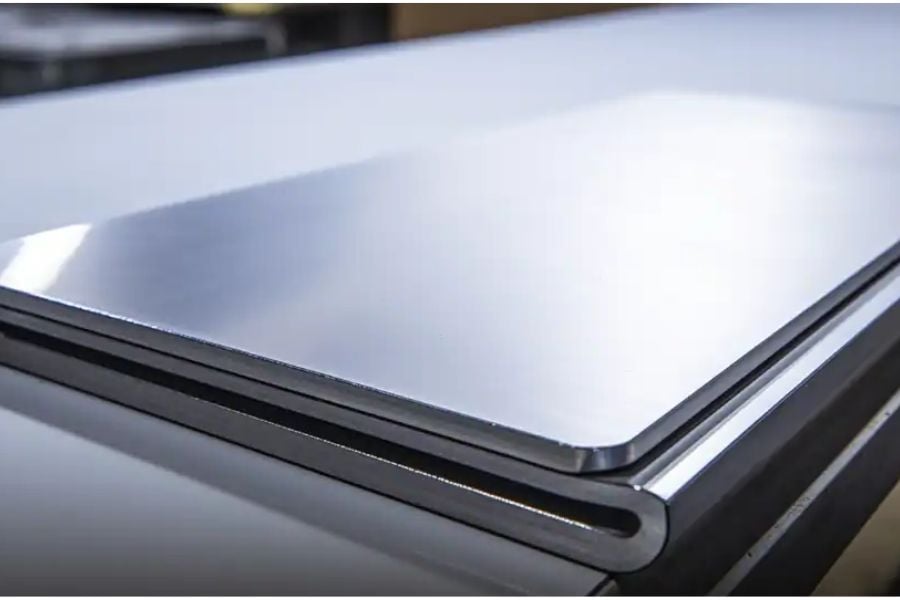
What Is Sheet Metal Hemming?
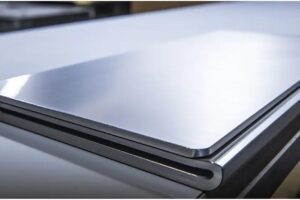
At its core, sheet metal hemming is the manufacturing process of folding the edge of a piece of sheet metal back onto itself. Unlike a simple bend, which creates an angle, a hem creates a folded edge where the material doubles back, forming a flat, rounded, or teardrop-shaped profile.
The primary purposes of hemming extend far beyond merely hiding a sharp edge. First and foremost, it is a safety measure. By encapsulating the raw, sheared edge, hemming eliminates the risk of laceration during handling, installation, and final use. Secondly, it significantly improves the final product’s appearance. A hemmed edge provides a clean, finished look that signals quality and precision.
However, the most critical engineering benefit is the increase in stiffness. When an edge is hemmed, the moment of inertia of the part increases substantially. This means the component can resist bending and flexing far more effectively than a single-layer sheet of the same thickness.
Consider the automotive industry: the edges of car doors and hoods are classic examples of hemming in action. Without a hem, the outer door panel would have a razor-sharp edge that could injure passengers. More importantly, the hem adds structural integrity to the large, flat panel, preventing it from “oil-canning” (flexing in and out) during driving or when the door is slammed.
All Types of Hems
Not all hems are created equal. The geometry of the fold is dictated by the material properties, the required structural outcome, and the manufacturing method. Here is a breakdown of the most common hem types used in fabrication.
Flat Hem (Closed Hem)
The flat hem, also known as a closed hem, is the most common type. In this configuration, the edge is completely folded over until it lies flush against the base metal. There is no gap or radius left inside the fold.
- Best For: Highly ductile materials like low-carbon steel.
- Consideration: Because the material is folded completely flat, the bend radius is essentially zero. This creates extreme stress on the outer fibers of the material. If the metal lacks sufficient ductility (i.e., the ability to stretch without breaking), it will crack along the bend line. Therefore, flat hems are generally not recommended for harder or less ductile materials like high-strength steel or aluminum.
Open Hem
An open hem is characterized by a small, intentional gap or bend radius left inside the fold. Unlike a flat hem, the folded edge does not touch the base metal.
- Best For: Materials with moderate ductility or when a designer wants to avoid stress concentration.
- Use Case: This type is ideal for materials that might fracture if folded completely flat. The radius distributes the bending stress over a larger area, reducing the risk of cracking. It is also commonly used when a wire or cable needs to be inserted into the hem for reinforcement.
Teardrop Hem
The teardrop hem is a specialized form of an open hem. As the name suggests, the fold creates a profile that resembles a teardrop—a distinct radius on the outer edge that gradually tapers to the base metal.
- Best For: Aluminum and other less ductile materials.
- Why: Aluminum has a much lower elongation percentage compared to steel. Attempting a tight flat hem on aluminum will almost certainly result in cracking. The teardrop hem provides a specific, generous radius that maintains the structural integrity of the part without exceeding the material’s tensile limits.
Rope Hem
The rope hem is similar to an open hem but features a more pronounced, almost circular profile.
- Best For: Applications requiring maximum edge reinforcement.
- Function: The large circular profile significantly increases the stiffness of the edge. It is often used to enclose a wire or a solid rod, creating a composite structure that combines the sheetmetal’s formability with the rod’s tensile strength.
Hem Type | Geometry | Ideal Material | Key Benefit |
Flat (Closed) | Flush fold, no gap | Low-Carbon Steel | Maximum stiffness, cleanest aesthetic |
Open | Intentional radius/gap | Mild Steel, Ductile Alloys | Reduces cracking risk, allows for wire insertion |
Teardrop | Tapered radius | Aluminum | Prevents fracture in low-ductility materials |
Rope | Pronounced circular profile | Steel, Aluminum | Highest edge strength, can encapsulate reinforcement |
The Hemming Process
The hemming process is essentially a controlled bending operation that must account for two critical phenomena: bend allowance and springback.
Bend Allowance refers to the length of the neutral axis (the area within the material that is neither stretched nor compressed) through the bend. When calculating a flat pattern for a part that will be hemmed, engineers must accurately account for this stretch. If the bend allowance is miscalculated, the final hem will either be too short (pulling away from the base metal) or too long (causing buckling).
Springback is the tendency of metal to return to its original shape after being bent. After the initial bend, the elastic stress within the material tries to “unbend” the part. In hemming, overcoming springback is a primary challenge. The final hemming operation must over-bend the flange slightly, or apply sufficient pressure to plastically deform the material past its yield point, ensuring the hem remains permanently closed. Failure to manage springback results in a “gapped” hem, which defeats the purpose of the operation by creating a loose, unsafe edge.
Die Hemming Process
For high-volume production runs, die hemming remains the industry standard. This traditional method utilizes a punch and a dedicated hemming die in a mechanical or hydraulic press machine.
The process typically follows a three-step sequence:
- Flanging Operation: The sheet metal is first formed to create a 90-degree flange. This is often done in a separate die prior to the hemming station.
- Pre-Hemming Operation: The flange is then bent to approximately 45 degrees. This intermediate step is crucial; it prevents the material from buckling and gradually guides the metal toward its final position without causing excessive stress.
- Final Hemming Stroke: The punch comes down with full force, flattening the flange completely against the base metal (for a flat hem) or to the desired radius.
Pros:
- Speed: Cycle times are measured in seconds, making it ideal for mass production.
- Repeatability: Once the die is hardened and set, the dimensional accuracy is exceptionally consistent.
- Strength: The high tonnage applied creates a very tight, robust hem.
Cons:
- High Tooling Costs: Dedicated dies are expensive to design and machine. This cost is prohibitive for low-volume production.
- Inflexibility: If a design change is required, the dies must be completely re-machined or replaced.
Die hemming is the backbone of automotive mass production lines, where thousands of identical car doors, hoods, and trunk lids are produced daily.
Roller Hemming Process
This method uses an industrial robot equipped with a roller tool—essentially a hardened steel wheel—to gradually fold the flange.
Unlike the instantaneous force of a die press, roller hemming is a multi-pass process. The robot arm follows a precise toolpath, typically using two or three passes to achieve the final fold.
- Pass 1 (Pre-hem): The roller applies pressure at a steep angle (e.g., 45 degrees) to begin the fold.
- Pass 2 (Final hem): The roller angle flattens to 0 degrees, pressing the flange down to its final position.
Advantages:
Lower Tooling Costs: No dedicated dies are required. Only a robot and a set of roller heads are needed.
- High Flexibility: The process is software-driven. To change a design, engineers simply update the robot’s toolpath program.
- Complex Geometries: Roller hemming excels at hemming complex, curved, or three-dimensional profiles that would be impossible or prohibitively expensive with traditional dies.
Hemming and Seaming Difference
A common point of confusion in fabrication is the distinction between hemming and seaming. While they both involve bending metal edges, their purposes and configurations are fundamentally different.
Sheet Metal Hemming involves folding the edge of a single piece of sheet metal back onto itself. The goal is to strengthen the edge, improve safety, and enhance aesthetics. There is no joining of separate components.
Seaming, in contrast, involves joining the edges of two separate pieces of sheet metal together. This creates a mechanical joint that holds the two sheets as one.
Examples of Seaming:
- Food Cans: The side seam of a tin can is a folded seam that holds the cylinder shape.
- Metal Roofing: Standing seam roofs use vertical seams to lock panels together while allowing for thermal expansion.
- HVAC Ductwork: Pittsburgh seams and standing seams are used to connect duct sections.
Feature | Hemming | Seaming |
Number of Parts | Single piece | Two or more separate pieces |
Primary Goal | Edge safety, stiffness, aesthetics | Joining, sealing (water/air tightness) |
Outcome | Doubled material thickness on edge | Interlocked connection |
Example | Car door edge | Metal roof panel connection |
Conclusion
Sheet metal hemming is a critical manufacturing technique that bridges the gap between raw material and a finished, safe, and durable product. From the sleek lines of a luxury vehicle to the robust frames of industrial machinery, the principles of hemming ensure that edges are not liabilities but assets.Selecting the Right Type: The choice between a flat, open, teardrop, or rope hem must be dictated by the material’s ductility and the application’s strength requirements.
Are you looking to integrate hemming into your next sheet metal fabrication project?Consult with our fabrication engineering team today to discuss your specific design challenges.Our experts can help you select the optimal hem type and process to ensure your project is safe, durable, and cost-effective.
Frequently Asked Questions
Q: What materials are best suited for sheet metal hemming?
A: Highly ductile metals are the best candidates. Low-carbon steel (such as 1008 or A36) is ideal because it can withstand the tight radii of a flat hem without cracking.
Q: Is roller hemming slower than die hemming?
A: Yes, significantly. Cycle time is the main trade-off for the flexibility of roller hemming. A die hemming press can complete a full hem in a matter of 5 to 10 seconds.