There is an old saying in the machine shop: “The wrong tool makes a hard job impossible, and the right tool makes a hard job look like magic.” In the context of CNC machining, where precision is measured in microns, the selection of the drill bit is a critical step in the “toolpathing” process.
When we talk about the various types of drill bits, we aren’t just talking about different sizes. We are talking about specialized geometries designed to handle specific forces, temperatures, and material densities.A clean hole is free of burrs, perfectly cylindrical, and maintains the structural integrity of the surrounding material. Selecting the correct bit ensures that your project stays on schedule, under budget, and within tolerance.
Anatomy of a Drill Bit
Before we dive into the specific categories, we must understand the language of the tool. A drill bit is a complex piece of engineering, and every curve has a purpose.
1. The Shank
The shank is the “handle” of the drill bit. It is the part that is inserted into the chuck of the drill or the tool holder of a CNC machine. The shank must be perfectly aligned to prevent “runout” (wobble), which can cause oversized holes or tool breakage.
2. The Flutes
The flutes are the helical grooves that wrap around the body of the bit. They serve two vital functions:
Chip Evacuation: As the bit cuts, it creates waste material (chips). The flutes act as a screw conveyor to pull these chips out of the hole.
Coolant Delivery: In high-speed machining, flutes allow cutting fluid to reach the tip, reducing friction and heat.
3. The Land and Margin
The land is the portion of the body between the flutes. The “margin” is the narrow, raised edge on the land that is the full diameter of the drill. This margin provides a guide for the bit within the hole, keeping it straight and reducing friction by ensuring only a small portion of the bit touches the hole’s walls.
4. The Point Angle
The point angle is the angle formed at the very tip of the bit. This is the first part of the tool to make contact with the workpiece. The sharpness and degree of this angle determine how the tool “bites” into the material and how much pressure is required to start the hole.
Main Types of Drill Bits
Now, let’s get into the heavy hitters. We categorize drill bits in two primary ways: by their coatings (which handle heat and friction) and by their application (the specific materials they are designed to cut).
Types of Coating Drill Bits
In high-volume manufacturing, the base metal of the bit often isn’t enough. We apply specialized coatings to increase “lubricity” (slickness) and surface hardness.
Titanium Nitride (TiN)
The most common “performance” coating, easily identified by its bright gold color. TiN is a hard ceramic material that increases the surface hardness of the bit and provides high heat resistance. It’s a great “all-rounder” for increasing tool life.
Titanium Carbonitride (TiCN)
This coating appears blue-gray or pinkish. It is harder and more wear-resistant than TiN. It is particularly effective in CNC environments where you are dealing with abrasive materials or need higher feed rates.
Titanium Aluminum Nitride
Usually dark violet or charcoal in color. This is a “top-tier” coating. Interestingly, TiAlN actually becomes more effective as it gets hotter, forming a protective aluminum oxide layer. This makes it the go-to for high-speed machining of hard steels.
Black Oxide
Not a “coating” in the traditional sense, but a surface treatment. It reduces friction and prevents “galling” (where the material being drilled sticks to the bit). It is inexpensive and excellent for general-purpose iron and steel work.
Diamond Drill Bits
These bits are coated with diamond powder. Since diamond is the hardest known material, these are used for the most “difficult” non-metallic materials, such as glass, ceramics, and stone.
Types of Drill Bits for Different Workpieces
Not all holes are created equal. Depending on whether you are working with metal, wood, or a variety of materials, you need a specific geometry.
Drill Bits for Universal Workpieces
These are the versatile soldiers found in almost every workshop.
Twist Drill Bit
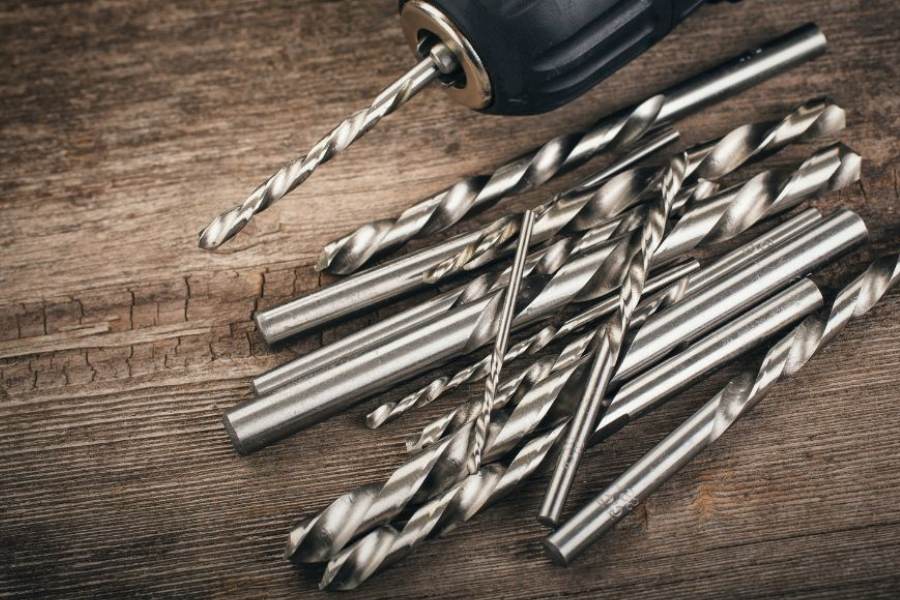
The most common bit in existence. It has a spiral shape and is used for everything from home repairs to industrial manufacturing. While “universal,” its performance is heavily dictated by its material (HSS, Cobalt, etc.).
Step Drill Bit
Often called “Christmas tree bits” due to their conical shape. These allow you to drill multiple hole sizes with a single tool. They are particularly popular in sheet metal
Types of Drill Bits for Different Workpieces
Not all holes are created equal. Depending on whether you are working with metal, wood, or a variety of materials, you need a specific geometry.
Drill Bits for Universal Workpieces
These are the versatile soldiers found in almost every workshop.
Twist Drill Bit
The most common bit in existence. It has a spiral shape and is used for everything from home repairs to industrial manufacturing. While “universal,” its performance is heavily dictated by its material (HSS, Cobalt, etc.).
Step Drill Bit
Often called “Christmas tree bits” due to their conical shape. These allow you to drill multiple hole sizes with a single tool. They are particularly popular in sheet metal work.
Unibits
A brand-name variation of the step bit, designed specifically for thin materials where a standard twist bit might “grab” or tear the metal.
Hole Saw Drill Bit
When you need a massive hole (like for a door lock), you don’t want to turn that much material into dust. A hole saw acts like a hollow cylinder with teeth, cutting only the perimeter.
Drill Bits for Metal Workpieces
Metalworking requires bits that can withstand high torque and extreme heat.
Center and Spotting Drill Bit
These are short, stiff bits used to create a “dimple” in a workpiece. This ensures that the subsequent, longer drill bit doesn’t “walk” or wander off-center. Precision starts here.
Core Drill Bit
Unlike a standard bit that cuts from the center out, a core drill is hollow. It is used to enlarge existing holes or to cut through heavy-duty metal plate while preserving the center “core.”
Ejector Drill Bit
Used in deep-hole drilling (like gun barrels or hydraulic cylinders). It features a specialized system where coolant is pumped in through a jacket and chips are forced out through the center of the tool.
Straight Fluted Drill Bit
Instead of a spiral, the flutes run straight up the bit. These are used for highly specialized applications in soft metals like brass or copper to prevent the bit from “self-feeding” or pulling itself into the material too quickly.
Drill Bits for Wood Workpieces
Wood is fibrous and prone to splintering. Wood bits are designed to slice those fibers cleanly.
Brad Point Drill Bit
These have a sharp center point (the “brad”) and two raised “spurs” on the edges. The point keeps the bit centered, and the spurs slice the wood fibers before the main cutting edge arrives, resulting in a perfectly clean, “splinter-free” hole.
Center Drill Bit
Used in woodworking lathes to create a precise starting point for turning a piece of wood.
Wood Spade Drill Bit
Also known as “paddle bits.” They are flat with a centering point. They are designed for fast, rough boring of large holes in wood where speed is more important than a “furniture-grade” finish.
Shanks and Angles
The “business end” of the drill is important, but how it connects to the machine and how it greets the material determines the efficiency of the cut.
Shank Types
- Straight Shank: The most common. It is a smooth cylinder held by a three-jaw chuck.
- Hex Shank: Features a six-sided base. These are designed for “quick-change” chucks and prevent the bit from slipping when high torque is applied.
- SDS (Slotted Drive System): Found in heavy-duty hammer drills. The shank has grooves that allow the bit to slide back and forth, delivering the “hammering” action directly to the material without the bit slipping out of the chuck.
Point Angles
The angle of the tip changes how the load is distributed.
118° Standard Point: The classic “general purpose” angle. It is steep enough to center easily in softer materials but blunt enough to stay durable.
135° Split Point: This is a flatter tip. It is harder to start without a pilot hole, but once it bites, it clears material faster and is much more resistant to “walking” on hard metals like stainless steel.
How to Choose the Right Drill Bit?
Selecting a bit shouldn’t be guesswork. Follow this 4-step framework used by professional machinists.
Step 1: Identify Your Workpiece Material
Are you drilling into 6061 Aluminum, 304 Stainless Steel, or Hardwood?
Soft Metals: HSS with a TiN coating.
Hard Metals: Cobalt or TiAlN-coated Carbide.
Wood: Brad Point or Spade bits.
Step 2: Determine Hole Depth and Diameter
If the hole is deeper than 3x the diameter of the bit, you are in “deep hole” territory. You will need bits with parabolic flutes or you will need to “peck drill” (retracting the bit frequently to clear chips).
Step 3: Match the Shank to the Chuck
Ensure your machine can actually hold the bit. High-torque applications should always favor Hex or SDS shanks over straight shanks to avoid the frustration of a spinning, slipping tool.
Step 4: Consider the Finish Quality
Does this hole need to be a “press-fit” for a bearing, or is it just a hole for a bolt to pass through? For high-precision finishes, you might drill a slightly smaller hole first and then use a Reamer to achieve the final dimension.
Conclusion
Understanding the various types of drill bits is the first step toward professional-grade results. Whether you are choosing a TiN-coated twist bit for a home project or a specialized ejector bit for an industrial application, the geometry and material matter.
However, sometimes the project is too complex for a hand drill or a basic workshop setup. When you need high-volume, high-precision holes in complex geometries, you need professional CNC machining.
At Easiahome, we specialize in taking the guesswork out of manufacturing. From selecting the perfect tool geometry to executing complex toolpaths on state-of-the-art CNC machines, we ensure your components are delivered with surgical precision.
Frequently Asked Questions (FAQ)
Q: Can I use a wood bit on metal?
A: Technically, you could try, but you shouldn’t. Wood bits (like Brad Points) are made of softer steel and have geometries that will catch and snap the moment they hit metal. Always match the tool to the material.
Q: What is the best drill bit for stainless steel?
A: Cobalt (M35 or M42) is the gold standard for stainless steel. Because stainless “work-hardens” (gets tougher as it gets hotter), you need a bit that can handle the heat without dulling.
Q: How do I know when my drill bit is dull?
A: Look for three signs:1.You have to push significantly harder to get the bit to cut.2.The bit starts making a high-pitched squealing noise.3.The chips changing from long, curly “ribbons” to fine, burnt dust.