Choosing between CNC machining and investment casting depends on more than the quoted unit price. Part geometry, order volume, tooling, secondary machining and delivery requirements all affect the decision. For many parts, the practical comparison is between machining from solid stock and investment casting followed by CNC finishing where needed.
What Are We Comparing: CNC Machining and Investment Casting?
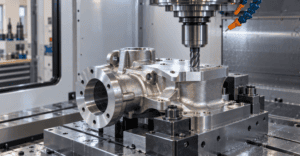
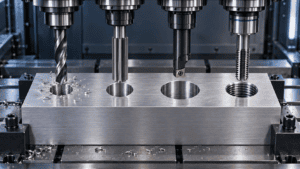
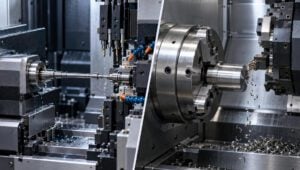
CNC machining starts with solid metal stock and removes material with cutting tools to create the required geometry. It is flexible for prototypes and low-volume orders because production can begin without making casting tooling. The process can also achieve precise dimensions and surface finishes on features such as bores, mounting faces and threads.
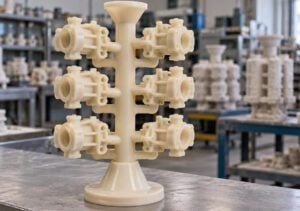
Investment casting uses a pattern, usually made from wax or a similar material, to create a ceramic mold. Molten metal fills the mold and forms a part close to its final shape. The process can produce complex geometries and reduce the amount of material that must be removed. The Investment Casting Institute describes the process as a way to create net-shape or near-net-shape components that can minimize or eliminate machining, depending on the part’s requirements. İnvestisiya Tökmə İnstitutu
Ifadəsi tökmə vs emal can suggest that the two processes are mutually exclusive. In practice, many cast parts require CNC machining on critical features. A more useful comparison is often:
- CNC machining from solid stock
- Investment casting with CNC machining on selected features
That distinction matters when comparing cost and lead time. A casting quote that excludes required machining is not directly comparable to a finished CNC-machined-part quote.
Hər Proses üçün Xərc Sürücüləri
The cost of CNC machining usually reflects material, machine time and production preparation. The starting block or bar may contain considerably more material than the finished part. Complex geometry can increase cutting time, require additional tool changes or demand multiple setups. Tight tolerances and extensive inspection can also add time and cost.
For a small order, programming, fixture preparation and setup can make up a significant share of the total. As the order grows, these costs are spread across more parts, but each additional part still requires material, machining time and inspection.
Investment casting has a different cost structure. It may require pattern tooling and process development before regular production begins. The unit cost then depends on casting operations, material, part yield, finishing, inspection and any secondary processes. If a casting needs machined bores or faces, include those operations in the comparison. The same is true for machining allowance: material must be left where the cutting tool will create a finished surface.
| Maliyet faktoru | CNC machining from solid stock | Investment casting plus CNC finishing |
|---|---|---|
| Upfront preparation | Programming, setup and fixtures | Pattern tooling, process setup and sample approval |
| Materialdan istifadə | Depends on stock size and material removed | Near-net shape may reduce material removal |
| Hissə həndəsəsi | Complex features can increase machine time | Complex shapes may be formed in the casting |
| Bitmiş xüsusiyyətlər | Machined directly from stock | Critical features may need secondary machining |
| İstehsal riski | Tool wear, setup variation and machining time | Casting yield, cleanup and casting variation |
Neither column guarantees the lower price. A simple component may be economical to machine even at higher quantities. A complex component may benefit from casting earlier if machining would remove a large amount of expensive material. The drawing and finished-part specification should be the same for both quotes.
Finding the Break-Even Quantity
The break-even quantity is the order size at which the estimated total cost of one route becomes equal to the other. A simple model separates upfront costs from per-part costs:
Total CNC cost = CNC fixed cost + order quantity × CNC unit cost

Total casting-route cost = casting fixed cost
                         + order quantity × casting-plus-machining unit cost

Break-even quantity =
(casting-route fixed cost − CNC fixed cost)
÷
(CNC unit cost − casting-plus-machining unit cost)
The formula only produces a meaningful crossover when the casting route’s estimated per-part cost is lower than the CNC route’s. If that difference is small, the break-even point may be beyond the likely demand for the part. If it is zero or negative, the simplified model does not show a volume at which casting becomes cheaper.
Use real quotes and make sure both suppliers are pricing the same scope. For CNC machining, confirm whether setup, fixtures, inspection, material and finishing are included. For the casting route, confirm pattern tooling, sample parts, casting yield assumptions, cleanup, required machining and inspection.
The calculation is a planning tool, not a universal rule. Changes to the design, tolerance requirements, material price or production forecast can move the result. If the expected quantity is close to the estimated break-even point, compare several order scenarios and ask suppliers to clarify any assumptions.
Lead Time: Prototype, Tooling and Production
CNC machining can be a practical route for an early prototype because it does not require investment-casting pattern tooling. The first parts can be scheduled once the design, material and machining plan are clear. However, a complex part may still take time to program, fixture and machine. Shop capacity, material availability and the number of setups also affect delivery.
Investment casting has more preparation before the first production-ready parts are available. The pattern tool must be made and checked. Patterns are then assembled, ceramic shells are built and processed, metal is poured, the casting is removed and finished. The casting may then need machining and final inspection. These stages create more dependencies before initial samples can be approved.
After the casting tooling and process are established, later production can follow a repeatable route. That does not guarantee a shorter replenishment lead time: foundry capacity, batch planning, material, casting yield, machining availability and inspection remain relevant. Ask suppliers to separate the expected timing for tooling, first samples, approval and repeat orders.
The right lead-time comparison is therefore not only “Which process makes the part fastest?” It is also “How soon can acceptable samples be approved?” and “How reliably can the supplier deliver the next batch?”
Choosing by Order Volume: Prototype to Production
The best route can change as a project moves from istehsala prototip. Volume categories are useful for organizing the decision, but they do not represent fixed quantity thresholds.
Prototype and Low Volume
CNC machining is often attractive when the design is still changing or only a small number of parts is needed. It avoids casting pattern tooling and can make precise functional samples directly from the specified material.
Investment casting may still be worth evaluating for a prototype if the geometry is difficult or expensive to machine, the part contains substantial material that would otherwise be cut away, or the casting route is central to the final design. A prototype casting method may have different tooling and economics from a standard production route, so clarify how representative the sample is of the intended process.
Orta Həcm
For medium-volume demand, compare total costs using the estimated break-even quantity. Include tooling and setup on one side, then include all finishing and inspection on both sides. At this stage, design stability matters: changes made after casting tooling is produced can lead to additional cost and schedule impact.
If demand is uncertain, ask suppliers to quote several order sizes. This helps show whether the casting route becomes more attractive as quantity increases, or whether CNC remains competitive across the forecast range.
Yüksək səs
For higher-volume production, investment casting may offer an advantage when it forms a complex shape near its final geometry and reduces recurring machining time or material removal. This advantage can be reduced if the part requires extensive CNC finishing, difficult inspection or extra operations to meet its final specification.
CNC machining can remain a strong choice for high-volume orders when the part is relatively simple, the material is readily available, and machining time is short and predictable. Automation, multi-part fixtures or bar-fed production can also affect the economics. A quotation based only on a single prototype may not represent the cost of a planned production run, so share the expected annual demand and batch size.
Hibrid Marşrut Mənalı Olduqda
Investment casting and CNC machining can complement each other. Casting can create ribs, curved walls, bosses and other complex features, while CNC machining produces the surfaces and dimensions needed for assembly.
The hybrid route works best when the drawing clearly identifies which surfaces remain as cast and which will be machined. The design must leave enough material on machined surfaces and provide a repeatable way to locate the casting in the fixture. The inspection plan should also connect the cast condition to the finished-part datums.
Machining allowances should be agreed during design and quoting, not added as an afterthought. ISO 8062-3 provides general casting dimensional and geometrical tolerances as well as machining allowance grades; critical finished features still need clear requirements on the drawing. ISO 8062-3: 2023
Praktik Qərar Yoxlama Siyahısı
Before choosing a process, confirm:
- Expected first order, annual demand and likely batch sizes.
- Part geometry, material and amount of stock removed by machining.
- Critical dimensions, tolerances, surface finishes and inspection needs.
- Tooling budget, sample approval requirements and target delivery date.
- Which casting surfaces will be machined and whether the quote includes those operations.
Ask both suppliers to quote against the same drawing revision and finished-part requirements. This makes the cost and lead-time comparison more useful.
Nəticə
Tək qalib yoxdur CNC machining vs investment casting. CNC machining can offer a direct route for prototypes and low volumes; investment casting can reduce recurring work for suitable complex shapes; and casting followed by machining can combine both advantages. Compare the complete route at the expected order volumes before deciding.
FAQ
Which is cheaper: CNC machining or investment casting?
It depends on the part and order volume. CNC may avoid tooling costs on small orders, while investment casting may reduce recurring cost when it forms a complex part near its final shape. Compare quotes for the same finished-part requirements.
What is the break-even quantity for investment casting?
There is no universal break-even quantity. It depends on the casting tooling cost, CNC setup cost and per-part costs for both finished routes. Use supplier quotes and include any secondary machining.
Is CNC machining faster for prototypes?
Often, because it does not require investment-casting pattern tooling. Actual lead time still depends on part complexity, material availability, shop capacity and inspection requirements.
Do investment-cast parts still need CNC machining?
Some do. Critical bores, threads, mounting faces and sealing surfaces may need machining to meet their specified dimensions, tolerances or surface finish.
Can a part move from CNC prototypes to investment casting for production?
Yes, but the cast version should be reviewed and validated against the finished-part requirements. Check the tooling design, machining allowance, datum plan, inspection method and any design changes before approving production.