Whether it is an aerospace component designed to shave grams off a satellite or a heat sink for a high-performance electric vehicle, “thin-walled” is the new standard. However, for CNC machinists, thin-walled parts represent a paradox: they are essential for performance but a nightmare for production.
Thin-walled machining is often considered a “black art” within the CNC community. When wall thicknesses drop below 1mm or the length-to-thickness ratio exceeds 20:1, the material no longer behaves like a rigid solid. Instead, it behaves like a vibrating string or a flexible sheet of plastic.
This guide provides a comprehensive deep dive into the strategies, tooling, and physics required to master CNC machining for thin-walled parts, ensuring you achieve high precision without the heartbreak of scrapped parts.
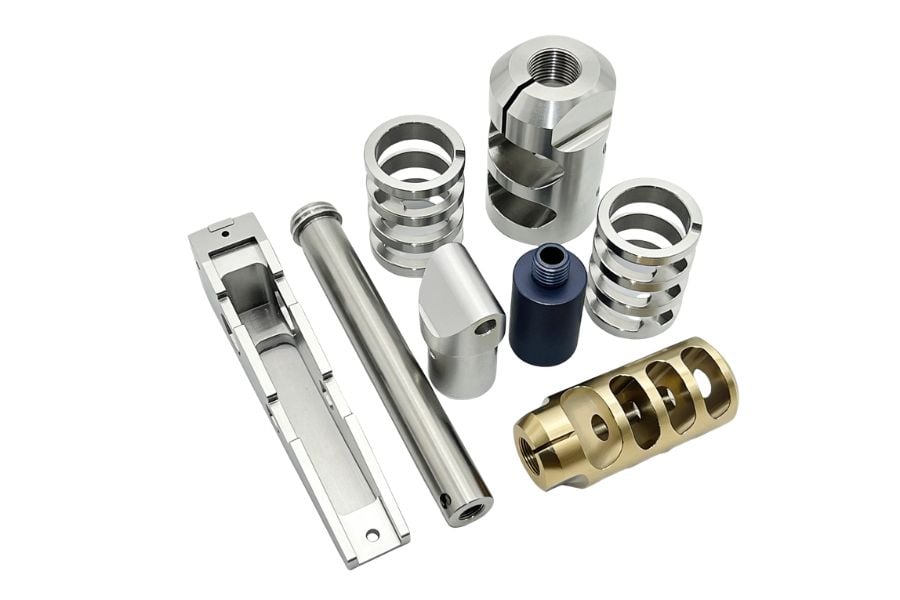
Why Thin Walls Deform
To solve the problem of thin-walled machining, you must first understand the forces working against you. In standard machining, the bulk of the material provides a “heat sink” and structural rigidity. In thin-walled machining, that support is gone.
Elastic and Plastic Deformation
The most common issue is deflection. As the cutting tool exerts force, the thin wall “pushes away” (elastic deformation). If the force exceeds the material’s yield strength, it stays bent (plastic deformation). This results in parts that are out of tolerance, often being thicker at the top than at the base.
Harmonic Vibration and Chatter
Thin walls act like tuning forks. The frequency of the spinning tool can match the resonant frequency of the wall, creating “chatter.” This doesn’t just leave an ugly surface finish; it can lead to micro-cracks in the material and catastrophic tool failure.
Thermal Expansion
Metals expand when heated. In a thick block, the heat dissipates through the mass. In a thin wall, the heat is trapped. This causes the wall to expand upward or outward during the cut, meaning by the time the part cools down, the dimensions have shifted.
Residual Stress
Every piece of raw metal has internal stresses from the rolling or forging process. When you remove the “skin” of the material to create a thin wall, these internal stresses are released. This causes the part to “potato chip”—warping or twisting the moment it is released from the CNC fixture.
Material Selection: Starting on the Right Foot
Not all materials are created equal when it’s time to go thin. Your choice of alloy and its tempered state will dictate your success rate.
Aluminum Alloys (6061, 7075, 2024): These are the most common thin-walled materials due to their strength-to-weight ratio. However, 7075 is generally more stable than 6061 for thin sections because it is harder and less prone to “gumming” the tool.
Titanium (Ti-6Al-4V): Titanium is notoriously difficult because it has a low modulus of elasticity—it is “springy.” It also has poor thermal conductivity, meaning heat stays at the cutting edge.
Stainless Steel: While rigid, the high cutting forces required for stainless can easily overwhelm a thin wall.
Pro-Tip: Always specify stress-relieved or annealed material. If you use “cold-rolled” stock for thin walls, the part will almost certainly warp the moment you start cutting.
Choosing Advanced Workholding
If you can’t hold the part properly, you can’t machine it. Traditional vises often apply “point pressure” that can crush or distort thin-walled components.
Vacuum Chucks
For flat, thin parts, vacuum fixturing is the gold standard. It applies even atmospheric pressure across the entire surface area, preventing the part from lifting or vibrating without the need for mechanical clamps that cause localized distortion.
Custom Jigs and “Negative” Molds
For complex geometries, engineers often create a custom fixture that mimics the “negative” shape of the part. This supports the thin wall from the back while the other side is being machined.
Phase-Change Materials (PCM)
This is a high-level industry secret. If you are machining a hollow thin-walled cylinder, you can fill the cavity with a specialized low-melting-point wax or a eutectic alloy. The material solidifies, providing internal support like a solid block. Once machining is finished, you simply heat the part to melt the filler away.
Choosing the Correct Tool Geometry
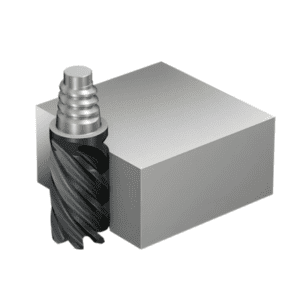
Standard end mills are often too aggressive for thin walls. To succeed, you need to minimize Radial Cutting Force (the force pushing against the wall).
High Helix Angles: A helix angle of 45° or higher helps “lift” the chips out and converts some of the side-pressure into vertical pressure, which is easier for the machine to handle.
Variable Helix End Mills: These tools have flutes that are spaced unevenly. This breaks up the harmonic resonance (chatter) because the “rhythm” of the tool hitting the wall is constantly changing.
Micro-Grain Carbide and Sharpness: You want the tool to “slice,” not “plow.” Polished flutes and razor-sharp cutting edges reduce the friction that causes heat and deflection.
Coatings: For aluminum, use DLC (Diamond-Like Carbon) or ZrN (Zirconium Nitride). These coatings are incredibly thin and slippery, preventing “Built-Up Edge” (BUE) where the metal welds itself to the tool.
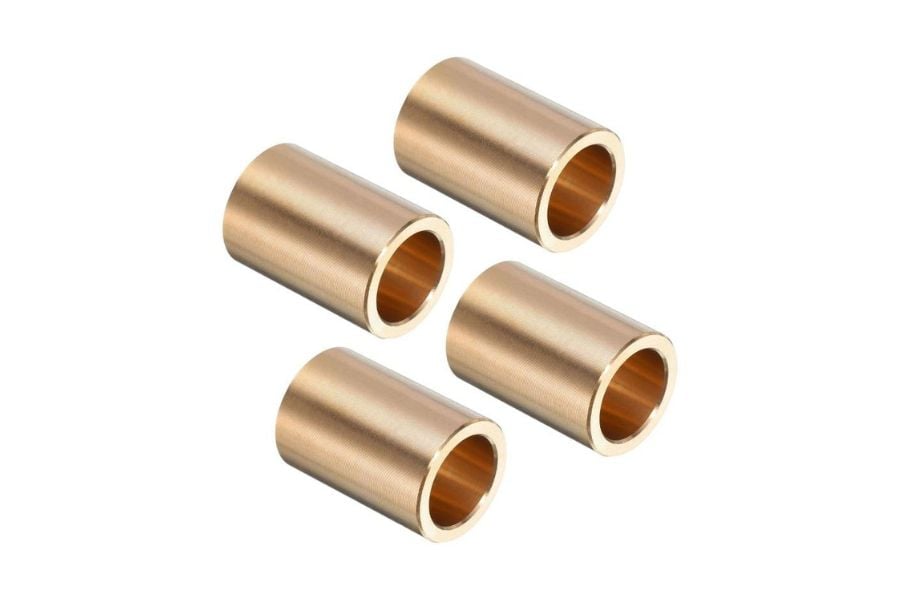
Strategic Toolpaths
How you move the tool is just as important as the tool itself. Modern CAM (Computer-Aided Manufacturing) software allows for strategies that were impossible a decade ago.
The “Christmas Tree” or Support Rib Strategy
Instead of machining one side of a wall to its final thickness and then moving to the other, you should leave “ribs” or extra stock as you go down. You machine in “steps,” keeping the bulk of the material at the bottom to provide structural support for the thin sections at the top.
Symmetric Milling (Mill-Turn)
On advanced 5-axis or Mill-Turn machines, you can use two tools simultaneously on opposite sides of a wall. The cutting forces of Tool A cancel out the cutting forces of Tool B. This effectively eliminates deflection.
High-Speed Machining (HSM)
The physics of HSM are counter-intuitive. By using a very light Radial Depth of Cut (RDOC) and a very high Feed Rate, the heat generated by the cut is transferred into the chip before it has time to migrate into the thin wall. This keeps the part cool and stable.
Climb Milling vs. Conventional Milling
For thin walls, Climb Milling is usually preferred. In climb milling, the tool starts at the thickest part of the chip and tapers off. This “pushes” the tool into the part rather than “rubbing” against it, which reduces vibration.
Thermal Management and Coolant Strategies
In thin-walled machining, the coolant’s job is 30% lubrication and 70% heat evacuation.
Flood Coolant: Essential for most materials to keep the part at a constant temperature. However, the sheer pressure of flood coolant can sometimes deflect very fragile walls.
MQL (Minimum Quantity Lubrication): Also known as “Near-Dry Machining.” It uses a fine mist of oil and high-pressure air. It is excellent for clearing chips (so they don’t get re-cut and cause vibration) without the “weight” of a heavy water stream.
Air Blast: Often, a simple high-pressure air blast is the best way to keep the cutting zone clear of chips while preventing “thermal shock” to the carbide tool.
Conclusion
CNC machining thin-walled parts is where the “science” of engineering meets the “art” of machining.As software simulation becomes more powerful, we are now able to predict “digital twins” of thin-wall deformation before the first chip is even cut. However, no software can replace the intuition of a skilled operator who understands how metal breathes under the pressure of a spindle.
Ready to bring your complex designs to life? Precision is more than a metric to us; it is a standard. If you are struggling with deformation or seeking a manufacturing partner that understands the nuances of thin-walled CNC components, we are here to help.Contact our engineering team today to discuss your technical specifications or request a custom quote for your next precision manufacturing project.