Aluminium L'aluminium est un matériau essentiel de l'ingénierie moderne : apprécié pour sa légèreté, son faible coût et sa facilité d'usinage. Cependant, à l'état brut, il est relativement tendre et sensible à l'abrasion et à la corrosion. Pour la conception de pièces destinées aux secteurs de l'aérospatiale, de la défense ou des systèmes automobiles hautes performances, il est indispensable de disposer d'une surface capable de résister à des environnements extrêmes.
Comment rendre l'aluminium aussi résistant que l'acier à outils ? La réponse : l'anodisation dure.
Pourquoi l'anodisation dure est importante
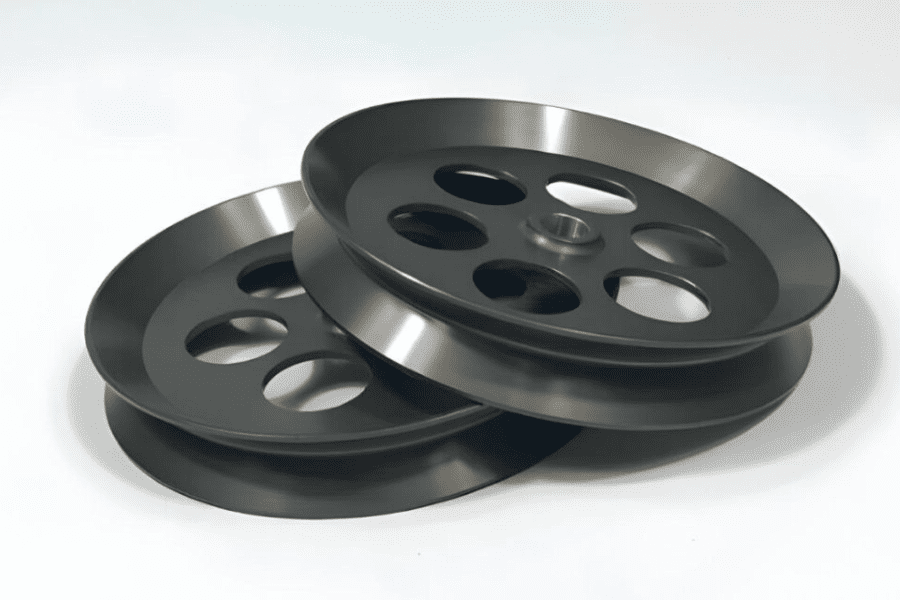
L'anodisation dure, scientifiquement appelée anodisation de type III, est la référence en matière de durabilité. Alors que l'anodisation standard est souvent utilisée pour apporter une touche de couleur aux appareils électroniques grand public, l'anodisation dure est un procédé électrochimique robuste qui transforme la surface d'une pièce en aluminium en une épaisse couche d'oxyde semblable à de la céramique.
Il ne s'agit pas d'un simple revêtement appliqué sur le métal comme une peinture ou un thermolaquage. L'anodisation dure est un « revêtement de conversion », c'est-à-dire qu'elle s'intègre au matériau de base, créant une liaison quasiment impossible à décoller ou à écailler. Pour les ingénieurs, ce procédé est la clé pour bénéficier de la légèreté de l'aluminium tout en obtenant la dureté superficielle de l'acier trempé.
Qu'est-ce que l'anodisation à couche dure ?
Pour comprendre l'anodisation dure, il est essentiel d'examiner les spécifications qui la régissent. La norme la plus reconnue dans le secteur est la MIL-A-8625, et plus précisément le type III. Bien que cette norme ait été mise à jour ces dernières années sous la référence MIL-PRF-8625, de nombreux ateliers d'usinage continuent d'utiliser l'appellation « MIL-A ».
L'épaisseur : le facteur déterminant
La principale différence entre le type II (standard) et le type III (revêtement dur) est l'épaisseur.
Anodisation de type II : Généralement de 0.0001" à 0.0006".
Anodisation dure : atteint des épaisseurs comprises entre 0.0005" et 0.003".
L'épaisseur standard du revêtement dur est généralement de 0.002 pouce (50 microns). Cette épaisseur accrue constitue la « réserve » de matériau nécessaire pour résister à une usure importante et aux contraintes mécaniques.
Dureté de surface
Sur l'échelle de dureté Vickers, une surface à revêtement dur présente généralement une dureté comprise entre 400 et 600 HV. À titre de comparaison, cette surface est plus dure que de nombreux aciers inoxydables et approche la dureté de certaines pierres précieuses. C'est cette dureté qui confère l'incroyable résistance aux rayures requise pour les engrenages, les pistons et les mécanismes coulissants.
Comment fonctionne le procédé de revêtement dur
L'anodisation dure est une version avancée du procédé électrolytique standard, mais elle nécessite un contrôle beaucoup plus strict des variables telles que la température et la tension.
La chimie du bain
Le procédé se déroule dans un bain d'acide sulfurique. Cependant, contrairement au procédé de type II, qui a lieu à température ambiante, le bain de type III est refroidi à des températures proches de zéro, généralement entre 32 °C et 50 °C.
La température froide est essentielle car elle ralentit la tendance de l'acide à dissoudre à nouveau la couche d'oxyde lors de sa formation. Cela permet à cette couche de devenir beaucoup plus dense et dure que dans un bain plus chaud.
Répartition étape par étape :
1. Prétraitement : Les pièces sont nettoyées pour éliminer les huiles, puis « décapées » dans une solution alcaline afin d’éliminer la couche d’oxyde naturelle. Ceci garantit la croissance uniforme de la nouvelle couche dure.
2. Bain électrolytique : Cette pièce fait office d'anode (électrode positive) dans le circuit.
3. Augmentation progressive de la tension : À mesure que la couche d’oxyde se forme, elle devient isolante électrique. Pour que le processus se poursuive, l’alimentation doit augmenter progressivement la tension (souvent jusqu’à 100 V) afin de faire passer le courant à travers le revêtement de plus en plus épais.
4. Étanchéité optionnelle : Après le bain, la pièce présente une surface poreuse. L’étanchéité hydrothermale (eau chaude déminéralisée) ou chimique (acétate de nickel) permet de boucher ces pores. Cependant, de nombreux ingénieurs choisissent de ne pas étanchéifier les revêtements durs, car les surfaces non étanchéifiées offrent une résistance à l’usure légèrement supérieure et un coefficient de frottement plus faible.
Principaux avantages pour les applications industrielles
Pourquoi consacrer plus de temps et d'argent au Type III ? Les gains de performance sont transformateurs.
Résistance extrême à l'usure
Grâce à sa surface constituée d'une couche d'oxyde d'aluminium d'une dureté comparable à celle du saphir, ce traitement est idéal pour les environnements abrasifs. Si votre pièce est soumise à un frottement métal sur métal ou exposée à des particules abrasives, l'anodisation dure prévient le grippage, un phénomène courant avec l'aluminium brut.
Protection contre la corrosion
L'anodisation dure crée une barrière étanche à l'air. Correctement réalisée, les pièces de type III résistent à des milliers d'heures de tests au brouillard salin. C'est pourquoi ce procédé est indispensable pour les équipements marins et sous-marins.
Isolation électrique (rigidité diélectrique)
L'oxyde d'aluminium est une céramique non conductrice. Une pièce revêtue d'un revêtement dur agit comme un isolant naturel à haute rigidité diélectrique. C'est la solution idéale pour les boîtiers électroniques où l'on souhaite éviter les courts-circuits ou les arcs électriques entre les composants internes.
Stabilité thermique
Contrairement aux revêtements organiques (comme la peinture), un revêtement dur ne fond pas et ne s'écaille pas sous l'effet de la chaleur. Il reste stable à haute température, ce qui explique son utilisation fréquente sur les composants de moteurs et les dissipateurs thermiques.
Anodisation dure ou anodisation standard : laquelle vous convient ?
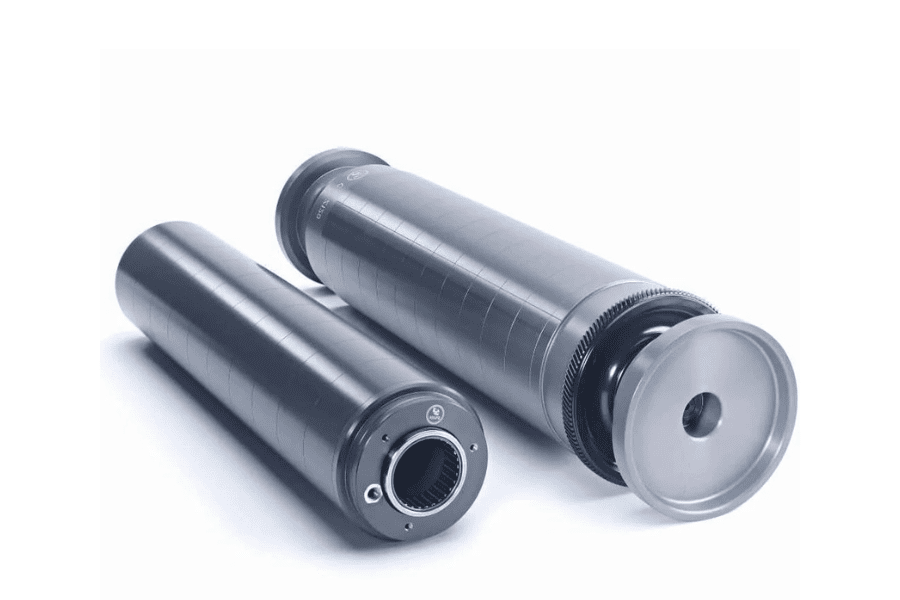
Le choix entre les deux dépend de votre priorité : « avoir une belle apparence » ou « travailler dur ».
Fonctionnalité | Type II (standard) | Type III (couche dure) |
Objectif principal | Esthétique / Couleur / Protection légère | Résistance à l'usure / Durabilité |
Grosor | Mince (0001" – 0006") | Épaisseur (0005" – 003") |
Dureté | Modérée | Extrême (aspect céramique) |
lustrée | Lumineux, éclatant, clair | Gris foncé, bronze ou noir |
Prix | Coût en adjuvantation plus élevé. | Plus élevé (en raison du refroidissement/de l'énergie) |
Applications industrielles
Aérospatiale et défense : Utilisé pour les trains d'atterrissage, les corps de vannes et les composants structurels exposés au frottement atmosphérique.
Médical : Les instruments chirurgicaux utilisent souvent un revêtement dur car celui-ci peut résister à des stérilisations répétées en autoclave sans se dégrader.
Service alimentaire : Parce qu’il est non toxique et incroyablement difficile à rayer, il est utilisé dans les ustensiles de cuisine de qualité commerciale et les machines de transformation des aliments où la présence de particules dans les aliments n’est pas envisageable.
Conclusion : Obtenir un revêtement dur pour vos pièces
L'anodisation dure (type III) est le traitement de finition ultime pour les composants en aluminium. Elle offre un niveau de protection qui permet à l'aluminium léger de rivaliser avec les aciers lourds et les alliages coûteux, même dans les environnements les plus exigeants au monde.
Prêt à démarrer votre prochain projet d'anodisation dure ? Contactez nos ingénieurs dès aujourd'hui pour mener à bien votre projet rapidement.
Foire Aux Questions (FAQ)
Q : L'anodisation dure peut-elle être appliquée à tous les alliages d'aluminium ?
A: Bien que la plupart des alliages d'aluminium puissent être anodisés, les résultats varient considérablement.
Q : Est-il possible d'obtenir une couleur vive et décorative avec l'anodisation dure ?
R : Généralement, non. Le procédé de type III impliquant une haute tension et de basses températures, la couche d'oxyde résultante est très dense et naturellement foncée (allant du gris foncé au bronze).
Q : L'anodisation dure modifie-t-elle la taille de ma pièce ?
R : Oui. Si vous spécifiez un revêtement de 2 mils (002 pouce), les dimensions externes de votre pièce augmenteront de 1 mil (001 pouce) par surface. Les ingénieurs doivent tenir compte de cette augmentation lors du calcul des tolérances des pièces s'emboîtant et des trous taraudés.