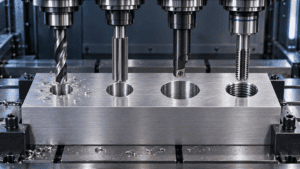
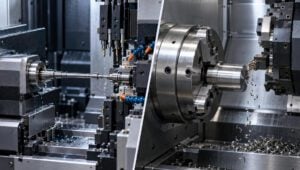
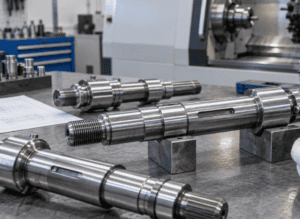
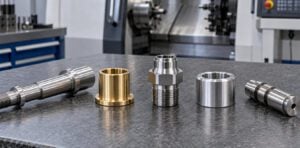
Choosing between aluminum and stainless steel is one of the first decisions that affects the cost, lead time, performance, and reliability of a CNC machined part. Both materials are widely used in precision machining, but they behave very differently during cutting and in real applications. Aluminum is usually selected when a part needs to be lightweight, easy to machine, cost-effective, and suitable for anodizing. Stainless steel is selected when a part needs higher strength, better wear resistance, and stronger corrosion resistance.
This guide compares aluminum vs stainless steel for CNC machining with a focus on 6061 aluminum, 7075 aluminum, 304 stainless steel, and 316 stainless steel. It explains how each material affects machining cost, weight, strength, corrosion resistance, surface finish, and application suitability before requesting a CNC machining quote.
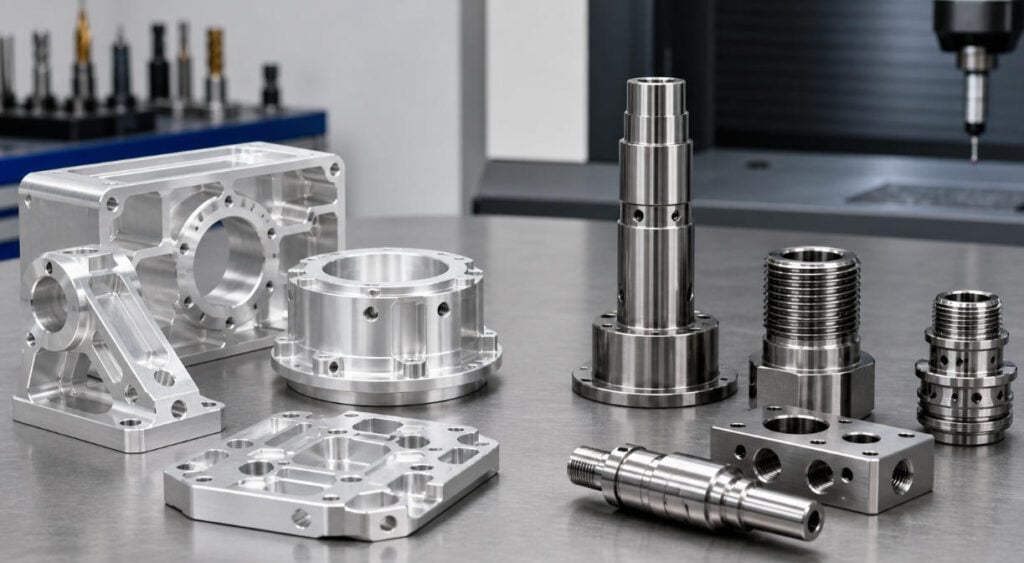
Quick Comparison: Aluminum vs Stainless Steel for CNC Machining
| Factor | Aluminum 6061 / 7075 | Stainless Steel 304 / 316 |
|---|---|---|
| Weight | Much lighter, good for weight reduction | Heavier, better for rigid and durable parts |
| Machining cost | Usually lower because cutting is faster | Usually higher because cutting is slower and tool wear is greater |
| Strength | 6061 is general purpose; 7075 is high strength | High strength, good toughness, strong durability |
| Corrosion resistance | 6061 is good, 7075 often needs protection | 304 is good, 316 is better in chloride or marine environments |
| Surface finish | Excellent for anodizing and cosmetic parts | Good for polishing, passivation, and brushed finishes |
| Typical use | Housings, brackets, fixtures, lightweight structures | Shafts, fittings, food equipment, medical and marine parts |
Why Aluminum Is Popular for CNC Machined Parts
Aluminum is one of the most common materials for CNC machining because it cuts quickly, produces good surface quality, and keeps part weight low. Compared with stainless steel, aluminum allows higher spindle speeds and faster feed rates. This can reduce cycle time, especially for parts with large material removal, pockets, contours, or complex milled features. For many prototypes and production parts, that difference directly lowers machining cost.
Aluminum is also attractive when the part needs a clean cosmetic finish. Anodizing can improve corrosion resistance, wear resistance, and appearance. For electronic enclosures, automation components, robot parts, and precision fixtures, aluminum CNC machining often provides a strong balance of price, lead time, and performance.
6061 Aluminum for CNC Machining
6061 aluminum is usually the first choice when a project needs a reliable and economical aluminum alloy. It has good machinability, good corrosion resistance, reasonable strength, and broad availability. In the T6 condition, 6061 is strong enough for many brackets, mounting plates, housings, frames, tooling components, and general mechanical parts.
6061 is often easier to source and more economical than 7075. It is also easier to finish, weld, and anodize. If a part does not require maximum strength, 6061 is usually the best starting point.
7075 Aluminum for CNC Machining
7075 aluminum is selected when a lightweight part needs significantly higher strength. It is common in aerospace, robotics, performance equipment, drone components, high-strength brackets, and load-bearing structural parts. Compared with 6061, 7075 has higher tensile strength and better fatigue resistance, which makes it suitable for parts where weight reduction and mechanical performance are both important.
The tradeoff is cost and corrosion behavior. 7075 is usually more expensive than 6061, and it is less corrosion resistant without proper surface treatment. For exposed or humid applications, protective finishing should be specified early.
Why Stainless Steel Is Used for CNC Machined Parts
Stainless steel is chosen when strength, toughness, corrosion resistance, and long service life matter more than minimum weight or lowest machining cost. It is much denser than aluminum, but it provides excellent durability in mechanical assemblies, fluid systems, food equipment, medical devices, marine hardware, and industrial components that face moisture, cleaning chemicals, or wear.
In CNC machining, stainless steel is more demanding than aluminum. It generates more heat, work-hardens more easily, and causes faster tool wear. Cutting parameters must be controlled carefully to avoid poor surface finish, tool marks, burrs, dimensional drift, and broken tools. Because of this, stainless steel CNC machining often costs more and may require a longer lead time than aluminum parts with similar geometry.
304 Stainless Steel for CNC Machining
304 stainless steel is the most widely used stainless grade for CNC machined parts. It offers a good combination of corrosion resistance, strength, formability, and availability. For general industrial environments, food equipment parts, brackets, fittings, covers, and mechanical components, 304 is often the standard stainless steel option.
Compared with 316, 304 usually has a lower material cost. It is practical when the part needs stainless properties but does not face severe chloride exposure, salt spray, or harsh chemical conditions. It is still harder to machine than aluminum, so cutting time and tool consumption remain important cost factors.
316 Stainless Steel for CNC Machining
316 stainless steel is used when corrosion resistance is the priority. It contains molybdenum, which improves resistance to chlorides and many chemical environments. This makes 316 a strong choice for marine parts, medical components, chemical processing equipment, outdoor fittings, fluid handling parts, and components exposed to cleaning agents or salty air.
The main disadvantage is cost. 316 is generally more expensive than 304, and it can be more difficult to machine. If a part will be used in a normal indoor or dry industrial environment, 304 may be enough. If the part will face saltwater, high humidity, aggressive cleaning, or chemical exposure, 316 can prevent corrosion problems that would cost more to fix later.
Cost Comparison: Material Price and Machining Time
When comparing aluminum vs stainless steel CNC machining cost, look beyond raw material price. The final quote depends on grade, part size, geometry, tolerance, surface finish, quantity, setup time, cutting time, tool wear, inspection requirements, and scrap risk.
In many cases, 6061 aluminum is the most cost-effective option because it is widely available and fast to machine. 7075 costs more than 6061 but can meet high strength requirements at low weight. 304 stainless steel usually costs more to machine than aluminum because cutting speeds are lower and tool wear is higher. 316 often adds another cost increase because of its material price and machining behavior.
Weight and Strength: Lightweight or Heavy-Duty?
Weight is one of the clearest differences between aluminum and stainless steel. Aluminum has roughly one-third the density of stainless steel, so it is much better for lightweight CNC parts. If the component is used in robotics, aircraft systems, handheld devices, automation equipment, or moving assemblies, choosing aluminum can reduce inertia, improve energy efficiency, and make installation easier.
Strength depends on grade and temper. 6061-T6 is strong enough for many structural parts, while 7075-T6 offers much higher strength for heavier loads. 304 and 316 stainless steel are heavier, but they provide toughness, rigidity, impact resistance, and wear resistance. For high-load shafts, threaded fittings, clamps, and durable components, stainless steel may be safer.
Corrosion Resistance: 6061, 7075, 304 and 316
Corrosion resistance depends on grade and environment. 6061 aluminum has good corrosion resistance for many general applications, especially when anodized. 7075 is stronger, but its corrosion resistance is weaker than 6061, so anodizing, conversion coating, painting, or another protective finish may be needed in exposed environments.
304 stainless steel is reliable in many indoor, food-grade, and general industrial environments. 316 stainless steel provides better protection in chloride-rich or marine environments. If corrosion failure would be expensive or safety-critical, 316 is often worth the added cost.
Machining Difficulty and Lead Time
Aluminum is easier to machine than stainless steel. It cuts faster, removes material more efficiently, and is generally less aggressive on cutting tools. This makes aluminum attractive for rapid prototypes, high-volume production, and parts with complex milling operations.
Stainless steel requires more controlled machining. Heat management, chip evacuation, tool coating, coolant strategy, and workholding all affect the result. Poor process control can lead to burrs, tool marks, chatter, and dimensional issues. Tight tolerances, small threads, thin walls, and deep holes can increase cost more dramatically in stainless steel than in aluminum.
For faster lead times, aluminum 6061 is usually the easiest route. For higher strength with low weight, 7075 is a strong option. For corrosion-resistant industrial parts, 304 is often practical. For marine, medical, and chemical environments, 316 is usually the better stainless steel choice.
Application Examples
6061 aluminum is commonly used for electronics enclosures, mounting plates, automation brackets, fixture plates, machine guards, adapter blocks, and general precision CNC machined parts. 7075 aluminum is better for aerospace brackets, drone frames, robot arms, high-load connectors, racing components, and other high-strength lightweight parts.
304 stainless steel is widely used for machine components, shafts, fittings, food processing parts, covers, clamps, and general industrial hardware. 316 stainless steel is better for medical instruments, marine fittings, chemical processing parts, pump and valve components, outdoor hardware, and components used in wet or chloride-rich environments.
How to Choose the Right Material Before Requesting a Quote
Before requesting a CNC machining quote, define how the part will be used. If weight matters most, start with 6061 or 7075 aluminum. If the part needs maximum aluminum strength, consider 7075. If corrosion resistance and durability matter more than weight, consider 304 or 316 stainless steel. If the part will be exposed to saltwater, cleaning chemicals, or harsh outdoor conditions, 316 is usually safer than 304.
For many projects, the best material is not the strongest material. It is the material that meets the functional requirement at the lowest reasonable cost. A 6061 part may be better than 7075 if the extra strength is unnecessary. A 304 part may be better than 316 if the environment is not corrosive enough to justify the higher price.
Quote Checklist for Aluminum and Stainless Steel CNC Parts
- Confirm the material grade: 6061-T6, 7075-T6, 304, 316, or another specified grade.
- Upload a STEP file for accurate geometry review.
- Provide a 2D drawing for tolerances, threads, surface finish, and inspection notes.
- Specify surface treatment, such as anodizing, hard anodizing, passivation, polishing, or brushing.
- State the expected quantity, prototype or production use, and target lead time.
- Describe the working environment, especially humidity, salt spray, chemicals, temperature, or wear.
Conclusion
For CNC machined parts, aluminum and stainless steel both have clear advantages. 6061 aluminum is cost-effective, easy to machine, lightweight, and suitable for many general-purpose parts. 7075 aluminum offers higher strength while keeping weight low, but it costs more and usually needs better corrosion protection. 304 stainless steel is a practical stainless option for strength and corrosion resistance in general environments. 316 stainless steel is the better choice for marine, medical, chemical, and highly corrosive applications.
If you are choosing between aluminum and stainless steel for CNC machining, compare the part’s load, weight target, corrosion exposure, tolerance requirements, finish, quantity, and budget together. Send your CAD file, technical drawing, material preference, and application notes to our engineering team, and we can help review the design and provide a practical CNC machining quote.