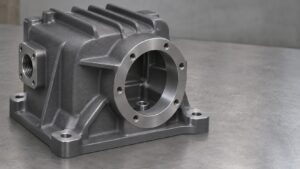
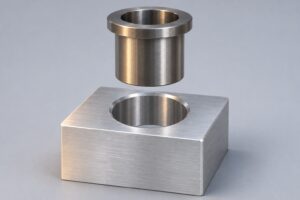
Yes, many aluminum castings can be anodized. The appearance depends on the alloy, the way the part was cast, and the surface the anodizer receives. A gray casting can meet its functional coating requirement while showing a visible difference between the textured cast body and a smooth machined pad. If the customer expects those surfaces to match, that expectation belongs in the sample approval plan.
Anodizing cast aluminum starts with choosing a finish that the actual casting can deliver. This guide explains how castings differ from wrought plate, why machining can change the result, and how to turn a color target into acceptance criteria for the finished part.
Start with the casting alloy and process
Anodizing converts aluminum at the surface into an oxide layer. Cast aluminum alloys contain an aluminum matrix and other constituents. In many casting alloys, silicon improves castability. Silicon-rich regions and other phases can respond differently from the aluminum matrix during pretreatment and anodizing. Their distribution can affect the appearance and local structure of the film. A supplier therefore needs the exact alloy designation and its condition to evaluate a cosmetic finish. The Aluminum Anodizers Council describes how alloy composition affects the appearance of anodized wrought products and castings. AAC guidance on specifying anodized aluminum.
A356 is an aluminum-silicon-magnesium casting alloy. A380 and ADC12 are examples of aluminum-silicon-copper die-casting grades. Treat those grade names as starting information for a finishing trial. For a color-critical part, get the alloy designation from the drawing or material record and confirm it with the foundry. The grade alone gives limited information about how a finished face will look. The casting route and local solidification history also influence what the anodizer sees at the surface. The Council notes that some higher-silicon cast grades can be anodized with suitable processes. AAC technical bulletin on anodized finishes.
Ask how the part will be made, such as investment casting, sand casting, permanent mold casting, or high-pressure die casting. Include any material condition called out on the drawing, the planned machining, and surface preparation such as blasting or polishing. If a customer supplies an anodized wrought plate as the color target, check whether a representative casting can approach that target before the finish becomes a contractual requirement. If the visual match is essential, resolve alloy and route feasibility before committing to the production tool.
If the anodizing requirement is functional, define the coating performance separately from its color. A dark finish can still reveal texture or a change in gloss, and a visual match alone provides little evidence about wear or corrosion performance. State which coating checks are required and which appearance criteria the part must also meet. This lets the foundry and finisher assess the alloy and process against the complete requirement. Easiahome overview of aluminum investment casting alloys.
Why anodized castings look different from wrought plate
Wrought plate has a rolled or machined surface that can be prepared to a defined texture. It can still show grain direction, machining marks, or color differences by alloy and batch. A casting brings a different starting surface. Mold texture, local solidification, parting areas, and finishing of gates can leave different textures or appearances on adjacent faces. With a transparent or translucent anodic finish, the surface beneath the film remains part of what you see. A smoother face may reflect more light at some angles, while a textured face scatters it.
On the same casting, the machined face has had its outer layer removed. This exposes a different part of the microstructure and leaves a different texture. Machining can also open a pore that was below the original surface. A study of AlSi11Cu2(Fe) die castings found different anodic film structures on milled and grit-blasted areas under the same test conditions. For a production part, compare the two zones side by side on the same finished sample and decide whether the contrast is acceptable in the installed orientation. University of Padua research on cast and milled surfaces.
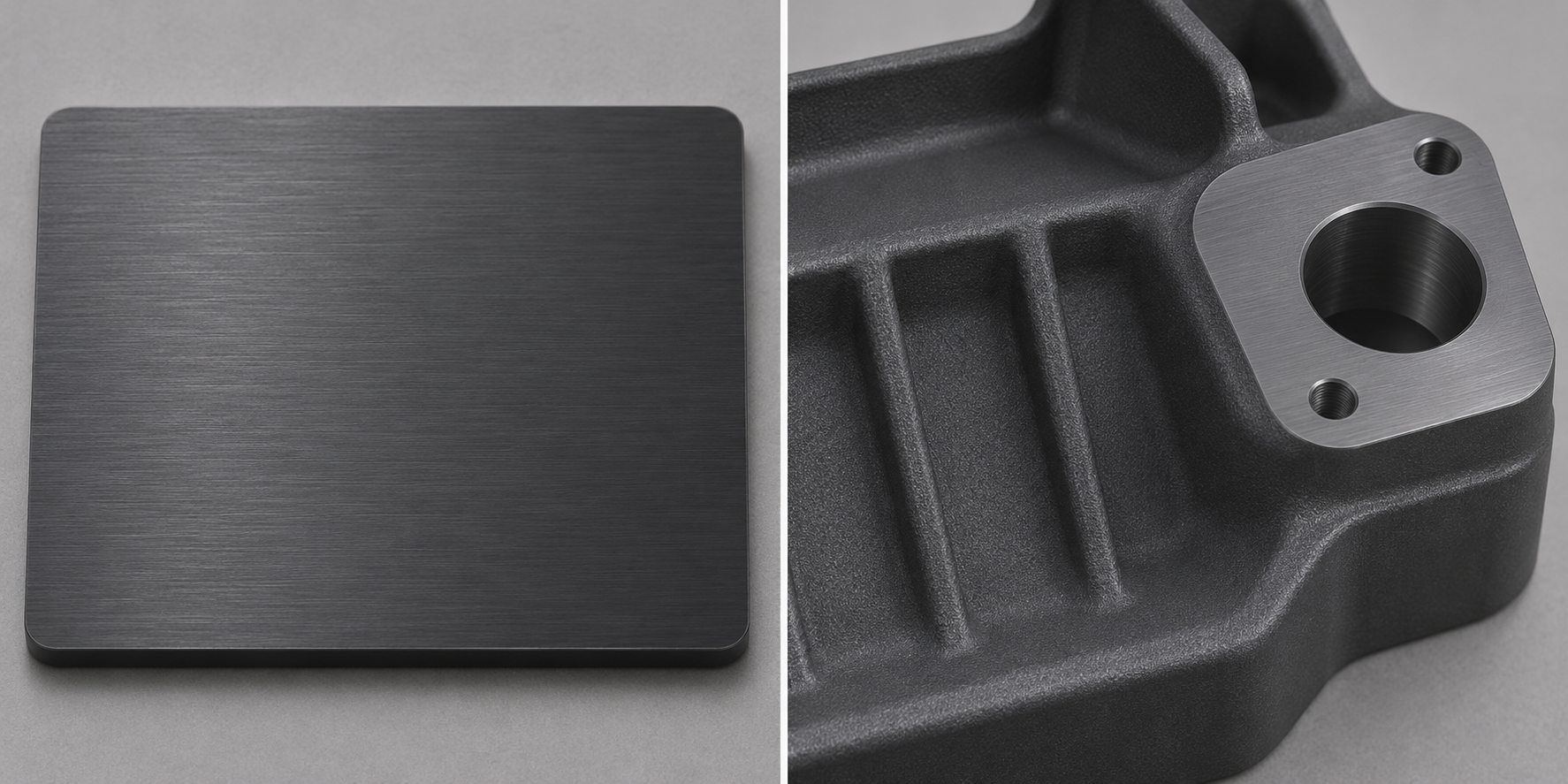
Check faces that sit next to one another in the product. A cast body and wrought cover may both be called satin black yet differ in gloss or shade at the seam. A machined band around a cast housing may also look lighter when the part is rotated. Approve the parts as an assembled pair if that boundary is visible in use. A flat color chip is useful for communicating a target. A matched set or approved samples from the intended surfaces can show what the customer will actually see.
Separate visible pores from color variation
Gas or shrinkage porosity can exist inside a casting. Once a pore reaches the surface, it can appear as a small pit after finishing. Machining, blasting, or chemical preparation can make previously hidden features visible. The anodic oxide follows the exposed surface, including its texture and open imperfections. Inspect the same areas before and after anodizing when diagnosing a recurring defect. A mark that follows the casting pattern, a pit concentrated around a machined boss, and a broad change in gloss call for different investigations.
For anodizing aluminum castings, separate the appearance assessment from structural or functional requirements. A shallow mark on a hidden exterior face may be acceptable under the appearance standard. A similar-looking opening on a sealing land or pressure boundary needs evaluation against the applicable engineering requirement. Visual inspection can document the location, apparent size, and distribution of an open indication. Specify a separate leak or integrity test if the function requires it. Keep the casting lot and cavity information where available so the foundry and finisher can compare recurring marks.
When an anodized part looks mottled, compare the surface at consistent angles before changing the dye. Check whether the variation follows the cast texture, the boundary of a machined pad, or a local imperfection. Ask the foundry and anodizer to review the same part together. If cleaning or surface preparation changes, recheck the appearance on a representative sample before applying the change to the entire order.
Approve appearance on parts made by the production route
Use a sample made with the planned alloy, casting route, machining, surface preparation, and anodizing process. Include all the visible surface conditions, especially the boundary between a cast face and a machined face. If a coupon is used early, have the supplier confirm its relationship to the actual part and approve a finished part before production release. Retain labeled reference samples with the drawing revision, finish designation, and approval date. Where the appearance naturally varies, agree on acceptable light and dark limits or a set of boundary samples.
| Area or characteristic | What to agree on | How to check |
|---|---|---|
| Primary cast face | Target shade, texture, acceptable visible pores or marks | Compare to approved cast samples at the specified viewing conditions |
| Visible machined pad | Allowed contrast to the cast area and acceptable machining pattern | Compare both zones together at the agreed angle |
| Adjacent cover or trim | Allowed shade and gloss difference across the assembled seam | Review an assembled pair against the reference set |
| Hidden surfaces | Which visual limits apply and where rack marks may appear | Inspect the drawing-defined zones and verify any functional requirements separately |
Put the appearance zones on a marked drawing or marked-up model. Set viewing conditions with the buyer and supplier, including lighting, distance, angle, and the orientation of the part. Agree how to judge the size, count, or grouping of visible imperfections when those details affect acceptance. If numerical color or gloss limits are required, agree on the instrument method, measurement locations, and surface orientation. A reading on a flat machined pad may describe that pad well while missing the appearance of a textured rib beside it. The Aluminum Anodizers Council recommends establishing a project-specific acceptable range for appearance. AAC anodic coating specification guidance.
When approving limits, record which example shows the lightest acceptable shade, which shows the darkest, and which demonstrates the maximum visible surface imperfection for each zone. A color sample can represent an acceptable shade while another sample represents the acceptable texture. If a pore allowance matters, identify it on a labeled part or marked photograph linked to the inspection instruction. That gives both teams a way to make the same decision on the next lot.
Use the same acceptance method for the pilot lot. Compare several production-intent parts and review consistency across casting and finishing batches when the order calls for it. Define which changes require renewed approval, such as a different alloy, mold source, blasting process, or anodizing supplier. Keep appearance approval and any coating-performance tests as distinct records. For machining allowances, final dimensions, and functional masking, see the separate guide to machining tolerances after anodizing.
What to send for a cast aluminum anodizing quote
Provide the alloy grade, casting route, marked cosmetic zones, and physical color sample. Include a drawing revision or model and identify which visible faces will be left as cast, machined, or prepared with another texture. If the part must match another component, send the mating part or a representative sample. State the required finish and what the finish must do, such as meeting an appearance target or a specified functional coating requirement. Include the sample approval and inspection scope in the request.
Send your casting drawing and finish requirements to Easiahome for review. Showing the alloy, production route, visible zones, and target sample together gives the supplier a basis for quoting the casting, machining, finish trial, and final acceptance checks.