If a CNC shipment contains parts from two material heats and one certificate is later questioned, can receiving identify which cartons to hold? The answer depends on whether the supplier can connect each shipping lot to the material and inspection records. A folder of certificates alone does not establish that connection.
For US OEM teams sourcing repeat production, define CNC machining lot traceability in the RFQ and purchase order. Match the level of traceability to the part’s risk, contractual requirements, and the way your receiving team handles inventory.
How CNC Machining Lot Traceability Links Heats, Lots, and Shipments
A material heat number identifies a melt or heat when the applicable material documentation uses that identifier. A production lot is the supplier’s defined group of parts processed under recorded conditions. A shipment is the quantity dispatched together. These identifiers can have different relationships: one heat may feed several production lots, and one production lot may ship in installments.
For production lot traceability, ask how the supplier defines a lot and what events trigger a new lot identifier. Examples include a material change, an agreed change in setup or process, or the start of a new production release. If your contract requires segregation by heat or by processing batch, state that requirement before production.
Connect Carton Labels to the Supporting Records
Start with what receiving can actually see. Specify the part identifier, revision where required, quantity, and lot identifier on the agreed packaging level. Use direct part marking only when it is required and permitted by the drawing or purchasing specification. Ask the supplier to show how a carton label leads to its packing list, inspection report, and material documentation.
For parts with outside finishing, ask whether the finish batch can be traced back to the incoming machining lots. If an outside processor combines lots, specify how the relationship must be recorded or whether mixing is prohibited. Apply the same logic after sorting or rework: retain the original lot identity and document the disposition or the relationship to any newly assigned lot.
Write the Traceability Requirements Into the RFQ
- Define the required granularity: shipment, production lot, material heat, or individual part where specified.
- List the records due with each release, such as the packing list, dimensional report, material test certificate, or applicable finishing record.
- Agree what fields must connect the records, such as part revision, supplier lot, material heat, and carton or shipment identifier.
- Specify when documents are due and what receiving should do if the identifiers or quantities do not reconcile.
- Confirm how long records must be kept and how quickly they must be available, if your purchasing requirements define either.
Ask shortlisted suppliers for a redacted sample record set. If the RFQ requires a CMM report, check that it identifies the drawing revision, the inspected sample and the production lot it represents. Use the CMM inspection report checklist for CNC parts to review the measurement evidence before approving the reporting format.
If two suppliers quote different traceability levels, compare the quoted costs after you align the scope. Lot segregation, extra labeling, and additional reporting can affect the work included in each release.
Verify Traceability on a Split Shipment
Illustrative example: A machining lot of 120 brackets ships as 80 pieces first and 40 later. Both packing lists reference the same machining lot, but each lists its own shipment quantity. The supplier’s lot record links the machining lot to the applicable material heat and inspection record. If the second shipment also includes parts from a different machining lot, the packing list identifies each lot and its quantity separately.
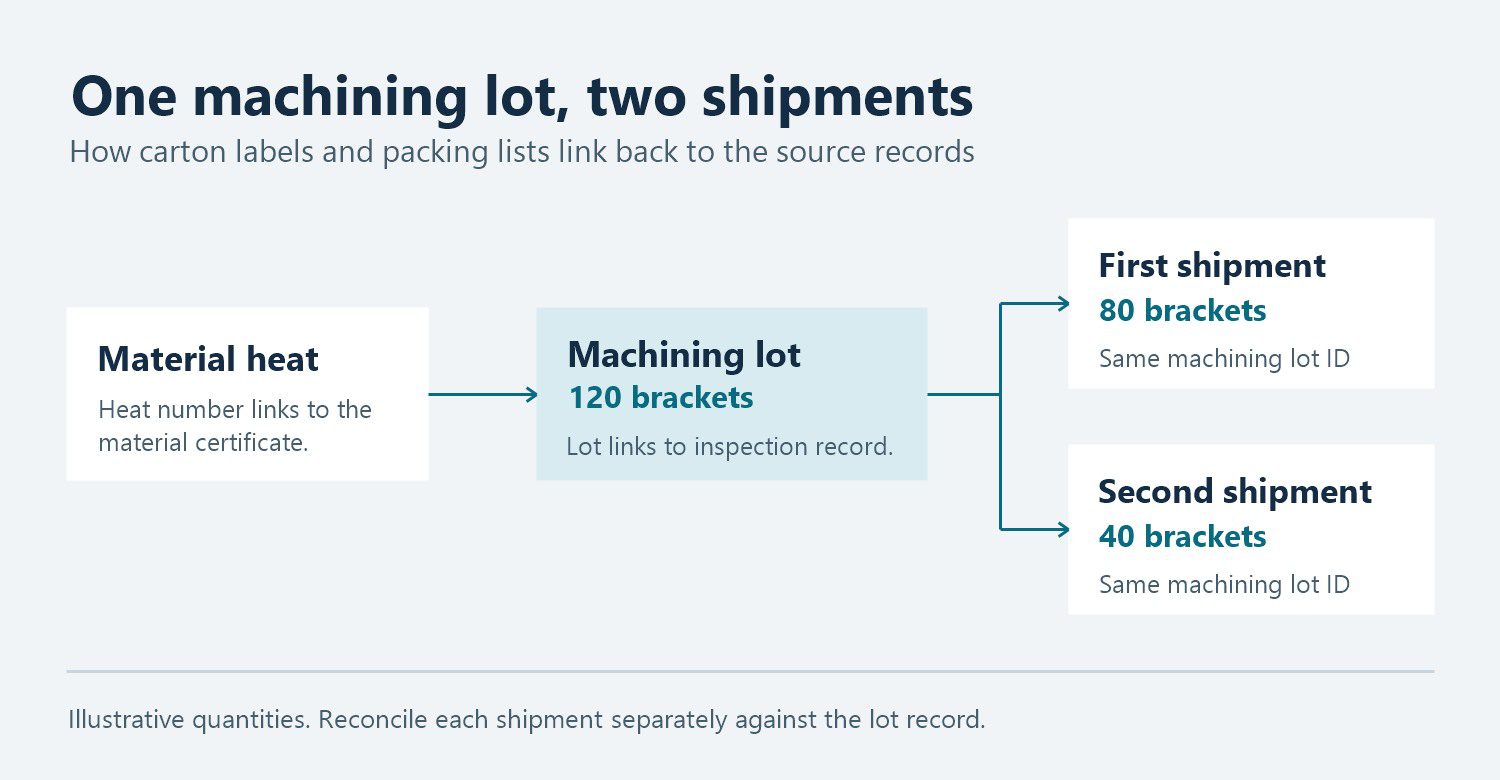
At receiving, pick a carton and trace it backward to the lot record and supporting documents. Then pick a material heat and trace it forward to the affected machining lots and shipments. Reconcile the quantities against dispatched, retained, scrapped, or reworked stock as applicable. This check exposes gaps while the supplier can still reconstruct the sequence.
What to Do When a Record Does Not Match
Identify the affected lot and hold it according to your receiving procedure. Send the supplier the label, packing-list reference, and exact discrepancy. Ask for the source record that resolves it. If the supplier cannot distinguish affected stock from unaffected stock, have your quality team decide the containment scope before parts are released to assembly.
Request a Quote With Lot Traceability Requirements
Send Easiahome the current drawing revision, material grade, finish, expected release quantities, and the records required at shipment. Include a sample label or report format if receiving uses a specific layout. These details let the supplier assess the machining and documentation scope together.
Review Easiahome’s CNC machining capabilities