When planning a CNC machining project, one of the first questions is usually: How long will it take to manufacture the parts?
The answer depends on much more than the time the machine spends cutting material. CNC machining lead time may include engineering review, material purchasing, CAM programming, machine setup, machining, inspection, surface finishing, packaging, and shipping.
A simple aluminum prototype may be completed within a few working days. However, a complex titanium part with tight tolerances, detailed inspection requirements, and surface treatment may take several weeks.
Understanding the complete production process helps engineers and purchasing teams create realistic schedules, reduce delays, and receive CNC machined parts on time.
How Long Does CNC Machining Usually Take?
Typical CNC machining lead times vary according to part complexity, order quantity, material, tolerance, and finishing requirements.
Project Type | Typical Quantity | Standard Lead Time | Expedited Lead Time |
Simple prototype | 1–5 parts | 3–7 working days | 1–3 working days |
Complex prototype | 1–5 parts | 7–15 working days | 3–7 working days |
Low-volume production | 10–50 parts | 1–3 weeks | 7–12 working days |
Medium-volume production | 50–500 parts | 3–6 weeks | 2–4 weeks |
High-volume production | More than 500 parts | 5–10 weeks | Based on production capacity |
These are general estimates rather than guaranteed delivery times. Surface finishing, special materials, full dimensional inspection, and international transportation may add extra time.
It is also important to confirm whether a supplier’s quoted lead time includes finishing and shipping. Some manufacturers only quote the factory production time.
CNC Machining Lead Time vs. Cycle Time
CNC machining lead time and machining cycle time are often confused, but they describe different parts of the production process.
What Is CNC Cycle Time?
Cycle time is the time required for a CNC machine to produce one part. It may include:
- Rough machining
- Finish machining
- Drilling and tapping
- Tool changes
- Machine repositioning
- Part loading and unloading
For example, if the machining cycle time is 30 minutes per part, producing 20 parts requires approximately 10 hours of machine time. However, this does not mean the complete order can be delivered within 10 hours.
What Is Total CNC Lead Time?
Total lead time covers the entire period from receiving the customer’s files to delivering the finished parts.
A simple estimation model is:
Total CNC lead time = engineering review + material sourcing + programming + setup + machining + inspection + finishing + packaging and shipping
In many projects, the actual cutting time represents only a small part of the total schedule. Material shortages, design questions, external finishing, and inspection can take longer than machining itself.
What Is Included in CNC Machining Lead Time?
Understanding each production stage makes it easier to estimate the final delivery date.
Engineering Review
Before production begins, engineers review the 3D model, 2D drawing, material, tolerances, surface finish, quantity, and inspection requirements.
Missing information can delay this stage. For example, the supplier may need clarification when the drawing specifies a tolerance that is not shown in the 3D model.
Providing complete manufacturing information at the beginning reduces unnecessary communication.
Material Sourcing
Common materials such as 6061 aluminum, mild steel, brass, POM, and standard stainless steel sizes are usually easier to source.
Special materials may take longer, especially when the project requires:
- Titanium or nickel alloys
- Aerospace-grade material
- Special plate thicknesses
- Uncommon bar diameters
- Imported materials
- Material test certificates
Even a material that is easy to machine may delay production when the required size is unavailable.
CAM Programming and Process Planning
CAM programming converts the CAD model into machining toolpaths. Engineers must select tools, cutting parameters, machining sequences, setup directions, and workholding methods.
A simple turned part may require little programming. A five-axis aerospace component with complex surfaces may require several days of programming, simulation, and process verification.
Machine Setup and Fixture Preparation
Before machining begins, operators prepare the machine, install tools, set work coordinates, and secure the material.
Standard parts may use regular vises or chucks. Complex parts may require soft jaws, vacuum fixtures, or custom workholding devices.
Custom fixtures increase preparation time but can improve repeatability and reduce machining time for larger quantities.
Machining and Inspection
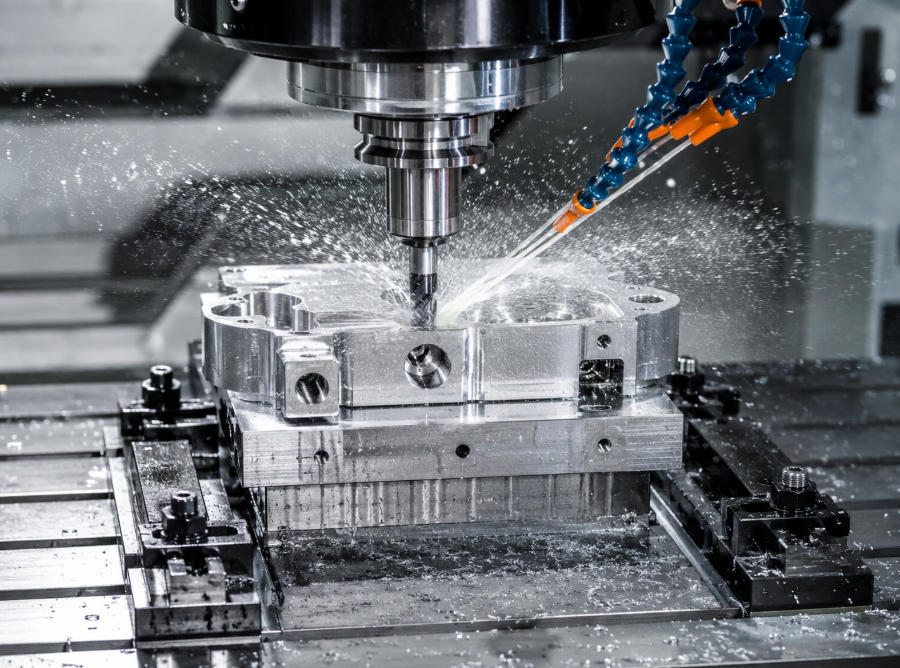
The machining stage may include roughing, finishing, drilling, threading, deburring, cleaning, and multiple setups.
After machining, parts must be inspected. Basic inspection may use calipers, micrometers, thread gauges, and height gauges. Precision projects may require CMM inspection, surface roughness testing, or complete dimensional reports.
Surface Finishing and Shipping
Processes such as anodizing, powder coating, plating, passivation, polishing, heat treatment, and laser marking may be completed by an external specialist.
Once finishing is complete, the parts are inspected again, packaged, and shipped. International delivery and customs clearance should be added separately when estimating the final arrival date.
Key Factors That Affect CNC Machining Lead Time
Part Complexity
Simple parts with accessible features usually have shorter lead times. Complex features can increase programming, setup, machining, and inspection time.
Common features that increase production time include:
- Deep cavities
- Thin walls
- Small-diameter holes
- Undercuts
- Internal corners
- Complex curves
- Multiple machining faces
- Features requiring special tools
Reducing unnecessary complexity is one of the most effective ways to shorten CNC turnaround time.
Number of Setups
Every time a part must be rotated, repositioned, or placed in another fixture, the operator needs to realign it.
A three-axis machine may need several setups to machine a part from multiple sides. A five-axis machine may complete the same part in one setup.
Five-axis machining requires more advanced programming, but reducing setups can improve accuracy and shorten the overall lead time for complex parts.
Material Machinability
Materials respond differently to cutting.
Aluminum and brass can normally be machined quickly. Stainless steel requires slower cutting speeds and careful tool selection because it may work-harden. Titanium generates heat and causes faster tool wear, while Inconel is especially difficult to machine.
Material | Machinability | General Lead-Time Effect |
Aluminum 6061 | Excellent | Short |
Brass | Excellent | Short |
Mild steel | Good | Moderate |
Stainless steel 304 | Medium | Moderate to long |
Titanium | Difficult | Long |
Inconel | Very difficult | Long |
POM | Good | Short, but deformation must be controlled |
Material availability must also be considered. A difficult material in stock may still be faster to start than a common material in an unusual size.
Tolerance Requirements
Tight tolerances require more careful machining and inspection.
They may involve:
- Additional finishing passes
- Slower cutting parameters
- More frequent measurements
- Temperature control
- Tool-wear compensation
- CMM inspection
- Higher risk of scrap or rework
Tight tolerances should only be applied to functional surfaces. Using precision tolerances on every dimension increases both cost and lead time without improving the part’s performance.
Order Quantity
Higher quantities normally require more machine time, but lead time does not always increase at the same rate as quantity.
Programming and setup are fixed activities. Once the process is stable, additional parts may be produced efficiently. Manufacturers may also use several machines at the same time.
For large orders, custom fixtures and automated loading can reduce cycle time. Split delivery can also allow the customer to receive the first batch while the remaining quantity is still being produced.
Surface Finishing
Surface finishing can add several days to the schedule.
Surface Finish | Typical Additional Time |
Bead blasting | 1–3 working days |
Type II anodizing | 3–7 working days |
Hard anodizing | 5–10 working days |
Powder coating | 3–7 working days |
Passivation | 2–5 working days |
Black oxide | 2–5 working days |
Electroless nickel plating | 5–10 working days |
Polishing | 2–7 working days |
Actual times depend on color, coating thickness, order size, appearance requirements, and the finishing supplier’s workload.
Custom colors usually take longer than standard colors because color samples may need to be approved before batch production.
How to Estimate CNC Machining Lead Time
A practical estimation can be completed in six steps.
1. Review the Design
Check part size, geometry, machining faces, hole depth, wall thickness, tolerances, threads, surface roughness, and finishing requirements.
2. Confirm Material Availability
Determine whether the material is in stock or must be purchased. Include time for cutting raw material and obtaining certificates when required.
3. Estimate Programming and Setup
Evaluate the machine type, number of setups, fixture requirements, number of cutting tools, and whether trial machining is necessary.
4. Calculate Machining Time
A basic calculation is:
Total machining time = setup time + cycle time per part × quantity + tool-change and inspection allowance
This calculation should also include expected tool wear and operator handling time.
5. Add Inspection and Finishing
Include first-article inspection, in-process inspection, final inspection, surface treatment, marking, cleaning, and packaging.
6. Include a Risk Buffer
A small buffer helps manage unexpected problems.
Simple projects may need a 5%–10% buffer. Medium-complexity projects may require 10%–20%, while highly complex projects involving special materials and external processing may require 20%–30%.
How to Reduce CNC Machining Lead Time
The following practices can help accelerate production without sacrificing quality.
Provide complete STEP files, 2D drawings, material specifications, quantities, tolerances, finishes, and inspection requirements when requesting a quotation.
Use standard hole sizes, available materials, practical corner radii, and reasonable tolerances. Avoid deep cavities, extremely thin walls, and unnecessary cosmetic requirements.
Confirm material stock and surface-treatment capacity before placing the order. Respond quickly to DFM questions and approve first samples without unnecessary delay.
For larger orders, request split delivery. Receiving the first batch early can keep testing or assembly moving while the remaining parts are produced.
Finally, select a manufacturer that can manage machining, inspection, finishing, packaging, and shipping through one coordinated production process.
Common Causes of CNC Machining Delays
Frequent causes of delays include incomplete drawings, unavailable materials, conflicting CAD files, design changes after production begins, special-tool requirements, failed first-part inspection, coating defects, and slow customer approval.
Transportation and customs can also delay the final delivery even when production finishes on schedule.
Clear communication and early risk identification are therefore just as important as machining speed.
Conclusion
CNC machining lead time is not simply the number of hours a machine runs. It includes engineering, material preparation, programming, setup, machining, inspection, finishing, packaging, and shipping.
Accurate estimation requires a complete understanding of the part design, quantity, material, tolerances, quality requirements, and secondary processes.
To receive parts faster, provide complete manufacturing files, choose readily available materials, avoid unnecessary tight tolerances, apply DFM principles, and confirm finishing requirements early.
For an accurate project schedule, send your CAD files, drawings, quantity, material, tolerance, and surface-finish requirements to your CNC machining supplier. A detailed engineering review will always provide a more reliable lead time than a general online estimate.
Frequently Asked Questions
Q: How long does CNC machining usually take?
A: Simple prototypes commonly require three to seven working days. Complex parts, larger quantities, tight tolerances, and surface finishing may extend the lead time to several weeks.
Q: Can CNC parts be produced in one day?
A: Some simple parts can be produced within one day when the material is in stock, machine capacity is available, and no special finishing is required.
Q: Does five-axis machining reduce lead time?
A: Five-axis machining can reduce the number of setups for complex parts. However, it may require more programming and may depend on five-axis machine availability.
Q: Does a larger order always have a longer lead time?
A: Not always. Manufacturers may use multiple machines, optimized fixtures, and automated production. However, a larger total machining volume will still affect the overall schedule.
Q: How can I get CNC machined parts faster?
A: Provide complete files, use standard materials, reduce unnecessary tolerances, simplify the design, approve DFM feedback quickly, and select a supplier with available production capacity.