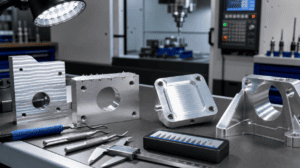
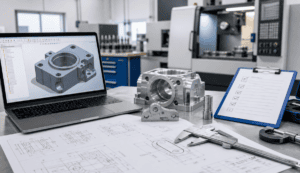
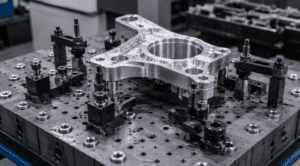
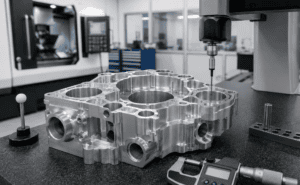
CNC machining is a reliable way to produce accurate metal and plastic parts, from one-off prototypes to low- and medium-volume production. However, two similar-looking components can receive very different quotations.
That is because CNC machining cost depends on more than raw material. Geometry, tolerances, setup time, machine type, tool access, surface treatment, inspection, and quantity all affect the final price.
This guide explains how CNC machining costs are calculated, which features increase price, and how to reduce manufacturing expenses without compromising part performance.
How Much Does CNC Machining Cost?
There is no fixed price for a CNC machined part. A simple aluminum plate with drilled holes may be inexpensive, while a five-axis titanium component with tight tolerances can cost many times more.
CNC shops normally calculate price from machine time, material, programming, setup, tooling, inspection, finishing, and packaging.
A higher machine rate does not always mean a higher total cost. A five-axis machine may finish a complex part in one setup, while a three-axis machine may require several setups, custom fixtures, and repeated alignment.
How CNC Machining Cost Is Calculated
A simplified formula is:
Total cost = material + programming and setup + machining time + tooling + labor + finishing + inspection + packaging and shipping
The unit price can be expressed as:
Unit cost = fixed costs ÷ order quantity + variable cost per part
Fixed costs include CAM programming, process planning, fixture preparation, setup, and first-article inspection. Variable costs include raw material, cutting time, tool wear, finishing, inspection, and packaging.
This is why a one-piece prototype usually has a high unit price. All fixed costs are assigned to one component. As quantity increases, those costs are distributed across more parts.
Main Factors That Influence CNC Machining Cost
Material Price and Machinability
Material price per kilogram is only part of the calculation. Stock size, minimum purchasing quantity, cutting allowance, waste, and availability also matter.
Aluminum 6061 machines efficiently. Stainless steel usually requires slower cutting and causes more tool wear. Titanium generates heat during machining and needs conservative cutting conditions. Some engineering plastics are easy to cut but can deform under heat or clamping pressure.
Choosing a material that exceeds the real performance requirement can unnecessarily increase cost.
Part Size and Material Utilization
Larger parts require more material, longer cutting paths, and sometimes larger machines. An irregular component may also need to be cut from a much larger block. If most of the stock becomes chips, both waste and cycle time increase.
Where possible, design around standard plate, bar, tube, or near-net-shape stock.
Geometric Complexity
Complex geometry increases programming, tool count, fixturing, and cycle time. Expensive features often include deep pockets, narrow slots, small internal radii, undercuts, angled holes, thin walls, complex surfaces, and high aspect-ratio holes.
A deep cavity with small corners may require a long, small-diameter end mill. This tool is less rigid, cuts slowly, and is more likely to vibrate or break. Increasing the corner radius often allows a larger, more stable tool.
Tolerances and Surface Roughness
Tight tolerances may require slower finishing passes, repeated measurement, special fixtures, and advanced inspection equipment. Applying ±0.01 mm to every dimension can make a part far more expensive than necessary.
The same applies to surface roughness. Very low Ra values may require additional machining, polishing, or grinding. Specify tight tolerances and fine finishes only on functional features such as bearing seats, sealing faces, and alignment datums.
Setups and Machining Directions
Every time a part is removed, repositioned, and realigned, labor and downtime increase. More setups also create more opportunities for accumulated error.
Tool Access and Special Tooling
Small internal features require small tools, deep features require long tools, and undercuts or special threads may need custom cutters. These tools increase cost and can extend lead time.
Using standard hole sizes, common thread pitches, accessible corner radii, and standard groove dimensions helps reduce tooling expense and production risk.
Production Quantity
Higher quantity normally reduces unit price because programming, setup, fixtures, and first-article inspection are spread across more parts.
The largest reduction often occurs when moving from one prototype to a small batch. At higher quantities, the reduction slows because material, machine time, finishing, and inspection remain variable costs.
Surface Treatment and Inspection
Anodizing, plating, passivation, powder coating, heat treatment, polishing, bead blasting, and laser marking all add cost. Price depends on part size, surface area, color, coating thickness, masking, appearance standards, and minimum batch charges.
Inspection can also change the price. Projects may require CMM reports, first-article inspection, material certificates, traceability, or 100% inspection. These requirements should be stated during the RFQ stage.
Hidden CNC Machining Costs
Some expenses are easy to overlook. A shop may have a minimum setup charge, while a finishing supplier may charge a minimum batch price even for one small part.
Thin or irregular components may require custom soft jaws, vacuum fixtures, support blocks, or dedicated gauges. Internal cross holes may need manual deburring, while cosmetic parts may require polishing and protective packaging.
Scrap risk is another hidden cost. Thin walls, tight tolerances, expensive materials, and long multi-operation processes increase the financial impact of rejected parts.
How to Reduce CNC Machining Cost
Apply Tight Tolerances Only Where Needed
Identify functional fits, sealing areas, alignment surfaces, and datums. Use economical general tolerances elsewhere. This reduces finishing time, inspection effort, and scrap risk.
Increase Internal Corner Radii
Larger radii allow larger, more rigid tools. They improve material removal rates and reduce vibration. Avoid perfectly sharp internal corners because rotating end mills naturally leave a radius.
Avoid Excessively Deep Pockets
Deep cavities require long tools and slow cutting. Reduce depth, open the geometry from another side, or divide the design into multiple assembled components.
Use Standard Holes and Threads
Standard drills, reamers, taps, and thread pitches are faster and cheaper. Avoid unnecessarily deep threads because full strength is often achieved with limited engagement.
Maintain Stable Wall Thickness
Very thin walls can vibrate, bend, or deform. Increase thickness where possible, add supporting ribs, and avoid sudden thickness changes.
Reduce Setups
Group features so they can be reached from fewer directions. Remove unnecessary side holes and angled features. For complex parts, compare multiple three-axis setups with a single five-axis setup.
Choose Cost-Effective Materials
Select material according to mechanical, thermal, corrosion, and regulatory requirements. Aluminum 6061 may be sufficient where 7075 is unnecessary. Carbon steel with protective coating may replace stainless steel in some applications. POM or nylon may replace PEEK when service conditions allow.
Any substitution should be approved by the design engineer.
Simplify Surface Finishing
Use as-machined surfaces where appearance is not critical. Choose common colors, avoid multiple finishes on one part, and define cosmetic standards clearly.
Provide Complete RFQ Information
An accurate quotation package should include:
- 3D CAD files, preferably STEP or X_T
- 2D drawings with tolerances
- Material grade
- Order quantity
- Surface finish
- Critical dimensions
- Inspection requirements
- Required certificates
- Target delivery date
- Estimated annual demand
Complete information reduces repeated communication and helps prevent price changes later.
How to Compare CNC Machining Quotes
The lowest unit price is not always the lowest project cost. Confirm that each quotation includes the same material grade, tolerances, finish, inspection level, packaging, and delivery terms.
Also check whether setup, fixtures, certificates, taxes, shipping, and finishing are included. Review lead time, quality capability, engineering support, communication, and experience with similar parts.
A slightly higher quotation may provide better process planning, lower scrap risk, more reliable delivery, and fewer quality problems.
Conclusion
CNC machining cost is influenced by much more than raw material and machine time. Geometry, tolerances, setups, tooling, finishing, inspection, scrap risk, packaging, and quantity all affect the final quotation.
The most effective cost reductions usually happen during the design stage. Practical tolerances, larger internal radii, standard features, accessible geometry, stable wall thickness, and suitable materials can reduce cost without weakening performance.
A clear RFQ and an experienced manufacturing partner are equally important. When the supplier understands the full requirements, it can select the right machine, tooling, fixtures, and production strategy for a more accurate and competitive CNC machining quote.
Frequently Asked Questions
Q:Why Is a One-Piece CNC Prototype Expensive?
A:Programming, setup, tooling, and first-article inspection are fixed costs. For one part, these expenses cannot be distributed across a larger batch.
Q:Is Five-Axis Machining Always More Expensive?
A:No. Its hourly rate is higher, but it can reduce setups, fixtures, labor, and alignment errors. For complex parts, the total cost may be lower.
Q:How Can I Get an Accurate CNC Machining Quote?
A:Provide a complete 3D model, detailed 2D drawing, material, quantity, finishing, inspection requirements, and delivery expectations. A DFM review can identify cost-saving opportunities before production.