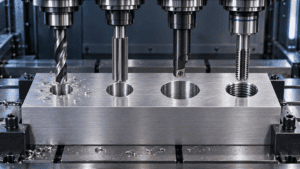
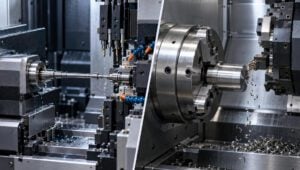
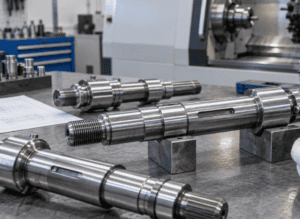
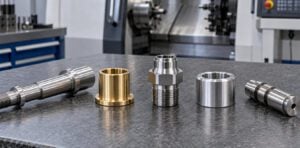
In CNC machining, repeatable accuracy depends on more than machine capability and cutting tools. The way a workpiece is located, supported and clamped often decides whether every batch meets the same tolerance target. A well-designed CNC fixture improves positioning repeatability, reduces vibration and distortion, protects cosmetic and sealing surfaces, and makes inspection more consistent. This guide explains practical CNC fixture design principles for precision machined parts, common workholding options, cost and lead-time tradeoffs, and what buyers should include in an RFQ before production begins.
Why CNC Fixture Design Belongs in the RFQ
CNC fixture design is one of the fastest ways to improve repeatability in precision machining, but it is often discussed too late. A buyer may send a CAD model, request a tight tolerance and expect the manufacturer to solve workholding after the price is fixed. That creates avoidable risk. The fixture determines how the raw stock is located, how the part is clamped, how datums are repeated, how vibration is controlled and how the operator confirms that each part is seated correctly.
For a prototype, a vise, soft jaws or simple stops may be enough. For repeat production, multi-operation parts, thin-wall housings, tight GD&T or cosmetic surfaces, fixture planning becomes part of the manufacturing strategy. A good machining fixture does not only hold the part. It protects the tolerance plan, shortens setup time, reduces operator judgment, improves inspection consistency and lowers the chance that dimensions drift from batch to batch.
For Easiahome customers, the practical message is simple: if a part has tight positional tolerances, sealing faces, cosmetic requirements, repeat orders or assembly-critical datums, fixture design should be reviewed before quotation. Sharing production quantity, critical features and assembly use lets our engineers choose a CNC workholding approach within our CNC machining services that matches both the drawing and the business goal.
What a CNC Fixture Must Control
Every CNC fixture has four core jobs: locate the part, support it, clamp it and keep machining access clear. Locating features create a repeatable relationship between the workpiece and the machine coordinate system. Supports prevent bending, chatter and unstable cutting. Clamps hold the workpiece against cutting force without deforming the part. Tool access keeps the cutter, coolant, probe and inspection tools from colliding with the fixture or the component.
Repeatability starts with datum strategy. If the drawing controls hole positions from datum A, B and C, the fixture should usually locate the part from surfaces or features that represent those datums. If a shop uses an unrelated face only because it is easier to clamp, the part may be easy to machine but difficult to inspect or assemble. This is why drawing review and fixture planning should happen together.
A fixture must also manage part distortion. Thin plates, deep pockets, ribs and open housings can move when clamped too aggressively or when residual stress is released during roughing. Good fixture design uses broad support, balanced clamping, roughing and finishing allowances, and sometimes stress relief or rest time to keep the finished geometry stable.
Common CNC Workholding Options
Soft jaws are often the first step beyond standard vise clamping. They are machined to match the part profile, which improves contact area and positioning repeatability. Soft jaws work well for prototypes, small batches and second-operation setups where a part must be held from a finished surface without functional or cosmetic damage.
Vise stops and locating pins are simple but valuable. They reduce setup variation by giving the operator a consistent position. Modular fixture plates and tooling plates add a grid of threaded holes, dowel locations and reusable components. They are useful for quick changeover, repeat orders or several part families that share similar locating and clamping needs.
Dedicated fixtures are designed for one part or a narrow part family. They cost more upfront, but they can reduce cycle time, inspection variation and operator handling on production orders. Vacuum fixtures, pneumatic clamps and hydraulic clamps can help with thin plates, flat panels or higher-volume production, but they require careful review of sealing area, clamping force, safety and maintenance.
Fixture Design Checklist for Buyers
A fixture-aware RFQ gives the supplier enough information to evaluate workholding risk before pricing and production planning. For precision machined parts, include these details whenever possible:
- 3D CAD model and controlled 2D drawing
- Material, heat treatment and surface finish requirements
- Critical tolerances, GD&T callouts and functional datums
- Cosmetic surfaces, sealing faces and areas where clamp marks are not allowed
- Expected prototype quantity, first production batch and annual volume
- Assembly use, mating parts and features that control fit or alignment
- Inspection requirements such as CMM report, first article inspection or AQL sampling
- Target lead time and whether repeat orders are expected
These details help the machining supplier decide whether standard workholding, soft jaws, a modular fixture plate or a dedicated fixture is the best technical and commercial choice.
Design Rules for Repeatable Precision Machined Parts
The first design rule is to make datums manufacturable and measurable. Datum surfaces should be large enough to locate the part, stable enough to resist distortion and accessible for inspection. Avoid defining critical geometry from small, rough, flexible or hard-to-reach features unless the product function requires it.
The second rule is to separate cosmetic surfaces from clamping surfaces where possible. A visible anodized face, polished surface or sealing land should not be the first choice for hard clamping. If the design has no safe clamping area, consider temporary stock, sacrificial tabs, added soft-jaw allowance or a drawing note that permits a controlled witness mark in a non-critical area.
The third rule is to design around the operation sequence. Many precision parts need rough machining, stress relief or rest time, then finish machining from a more stable reference. Parts with multiple sides may need datum transfer features, precision dowel holes or machined pads that allow the second and third operations to repeat the first setup.
The fourth rule is to consider inspection access. If a feature can only be measured after the part is removed from the fixture, the process should still define how the part will be oriented for CMM or manual inspection. Measurement capability matters because the inspection method must be able to verify the geometry that the drawing controls.
Engineering Example: Aluminum Electronics Housing
Consider a 6061 aluminum electronics housing with thin walls, four M3 mounting bosses, a gasket groove, a flat sealing rim and tight connector locations. The customer needs consistent assembly across several production batches. The drawing defines the sealing rim as datum A, two side faces as datum B and C, and connector holes relative to that datum structure.
A low-cost prototype might use soft jaws for the outside profile and a second operation to finish the sealing rim. That may be acceptable for ten samples. For repeat production, Easiahome might recommend a dedicated fixture that supports the housing under the thin-wall area, locates from stable datum pads, clamps away from cosmetic faces and allows probing or inspection of key locations between operations.
The fixture plan should also define verification. Connector hole positions may need CMM inspection on first articles and periodic sampling during production. Gasket groove depth and sealing rim flatness should be checked because they affect assembly performance. AQL or agreed sampling can be used after the process is stable, while early production may need more complete dimensional reporting.
CNC Fixture Options at a Glance
Fixture option | Best used for | Cost and volume fit | Buyer note |
Soft jaws | Prototypes, small batches and second operations | Low to medium tooling cost, fast customization | Share which surfaces can be clamped without cosmetic or functional damage. |
Vise stops or locating pins | Simple repeat jobs and rectangular parts | Low cost with reduced operator variation | Works best when datum faces are clear, stable and accessible. |
Modular fixture plate | Repeat orders and part families | Medium cost, reusable across similar setups | Useful when several parts share locating and clamping needs. |
Dedicated fixture | Production parts with tight tolerances | Higher upfront cost, lower repeatability risk | Best justified by batch volume, tolerance risk or repeat orders. |
Vacuum or pneumatic fixture | Thin plates, flat panels or higher-volume work | Higher planning cost, faster loading after validation | Requires review of clamping force, sealing area and part safety. |
How Fixture Planning Affects Cost and Lead Time
Fixture cost is not always bad cost. A simple one-time prototype may not justify a dedicated fixture, but a repeat order with tight tolerances often does. The right fixture can reduce scrap, shorten setup time, allow multiple parts per cycle, improve operator consistency and make inspection results more stable. The buyer may pay more upfront but reduce the real cost of usable parts.
The wrong approach creates hidden cost. If a part is quoted as a simple vise job and later requires special jaws, extra setup time or rework because dimensions drift, the project becomes slower and more expensive. If fixture needs are reviewed during the RFQ stage, the manufacturer can explain the tradeoff between prototype tooling, bridge production tooling and long-term production tooling.
Lead time also depends on fixture complexity. Soft jaws may be prepared quickly. Modular fixture plates can be configured from existing hardware. Dedicated pneumatic or vacuum fixtures require design, manufacture and validation time. Buyers should mention expected annual volume and repeat-order plans so the supplier can decide whether tooling investment makes commercial sense.
What to Include in a Fixture-Aware RFQ
A strong RFQ includes the 3D CAD file, 2D drawing, material, finish, quantity, target lead time, tolerance priorities and inspection requirements. For fixture planning, also share which surfaces are cosmetic, which features are assembly-critical, whether witness marks are allowed, and whether future production volumes are expected.
If the part has tight GD&T, identify the real functional datums and assembly stack-up. If a surface must remain flat for sealing, label it clearly. If the part will be anodized, plated or bead blasted, mention whether coating thickness affects fit. If a part will be reordered, tell the supplier because a more robust fixture may be justified even if the first batch is small.
Easiahome can review drawings and models for fixture risk before production. Our engineering team can suggest datum clarification, clamping allowances, sequence changes, soft-jaw strategies, modular fixture options or dedicated tooling when the order volume and tolerance risk support it.
Send Easiahome Your Fixture-Aware RFQ
Need repeatable CNC machined parts with fixture planning, tight tolerances and reliable inspection records? Send Easiahome your CAD files, 2D drawings, material, finish, quantity, critical tolerances and assembly requirements. Our engineering team will review the workholding risk and recommend a practical manufacturing and quality plan before production begins.
FAQ
Q: When does a CNC part need a dedicated fixture?
A: A dedicated fixture is worth considering when the part has tight tolerances, multiple operations, thin walls, repeat orders, cosmetic constraints or production quantities that make setup repeatability important.
Q: How does fixture design affect CNC machining tolerance?
A: Fixture design affects how consistently the part is located, supported and clamped. Better datum control and stable clamping reduce variation between parts, which makes tight tolerances easier to machine and inspect.
Q: Can fixture design reduce CNC machining cost?
A: Yes. It can add upfront tooling cost, but it often reduces total cost by shortening setup time, improving consistency, allowing multi-part machining and reducing scrap or rework.
Q: What is the difference between soft jaws and a fixture plate?
A: Soft jaws are custom-machined vise jaws that match a part shape. A fixture plate is a broader CNC workholding platform with holes, pins and clamps for locating one or more parts repeatably.
Q: Should fixture requirements be shown on the drawing?
A: The drawing should show datums, critical features, cosmetic surfaces, clamping restrictions and inspection requirements. The supplier can then design the fixture around real functional priorities.
Q: What files should I send to Easiahome for fixture review?
A: Send the 3D model, 2D drawing, material, finish, quantity, tolerance notes, expected repeat volume and any assembly or cosmetic restrictions that affect clamping and inspection.