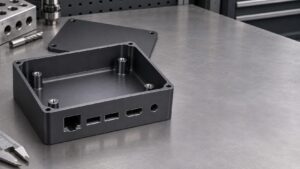
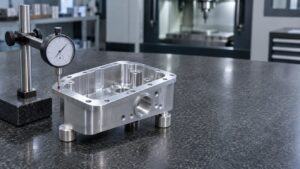
A machined aluminum part can meet its dimensions while clamped and then bow after release. For a thin cover, mounting plate or pocketed housing, that movement may matter more than a small difference in raw material price. Choosing the right 6061 temper is one part of controlling the risk.
When comparing 6061 T6 vs T651, the main distinction is controlled stress relief by stretching, rather than a change in alloy composition. This guide explains what the designations mean, when dimensional stability deserves extra attention, and what to specify before requesting a machining quotation. For a broader alloy overview, see our CNC machining materials selection guide.
6061 T6 vs T651: The Main Difference
Both are heat-treated conditions of the same 6061 aluminum alloy. T6 identifies solution heat treatment followed by artificial aging. T651 adds stress relief through controlled stretching after solution treatment and quenching, before artificial aging. The practical purpose is to reduce residual stress that can contribute to movement during material removal.
| Selection factor | 6061-T6 | 6061-T651 |
|---|---|---|
| Alloy composition | 6061 aluminum | The same 6061 alloy |
| Temper route | Solution heat-treated and artificially aged | Solution heat-treated, stress-relieved by stretching and artificially aged |
| Stretching requirement | The designation alone does not specify this stress-relief step | Controlled stretching is part of the designation |
| Machining concern | Assess movement where stock removal is substantial | Useful for reducing movement risk; distortion remains possible |
| Buying decision | Evaluate for relatively rigid parts and suitable available stock | Evaluate especially for plate-based parts with demanding flatness |
| Strength acceptance | Check the applicable product specification and thickness | Check those same factors; do not assume a strength upgrade |
This is a selection guide, not an authorization to substitute material. The drawing, product form, governing specification and material certificate determine what is acceptable.
Understand T6, T651 and T6511 Before Ordering
T6 describes the heat-treated condition
The alloy number and temper perform different jobs. “6061” identifies the alloy; “T6” describes its processing condition. A supplier offering only “6061 aluminum” has not fully defined the material required for a drawing that calls for 6061-T6.
T651 adds mechanical stress relief
The stretching operation produces a controlled permanent extension. It is a mill processing step, not simply an instruction for the machine shop to leave the component resting overnight. BIKAR’s 6061 technical information distinguishes the T651 condition from T6 and describes the associated stretching requirements. T651 is commonly encountered in plate and certain bar products.
T6511 is relevant when buying extrusions
Extruded bar and profiles may be supplied as T6511. This designation also involves stretching, with minor subsequent straightening permitted to meet dimensional tolerances. It should not be shortened to T651 without checking the purchase specification. Hydro’s alloy 6061 datasheet lists T6 and T6511 for extruded products and identifies stretching as the stress-relief operation.
Why Residual Stress Matters for Dimensional Stability
Residual stress is internal stress remaining without an external load. During machining, removing material can disturb the balance of those stresses. The component may bend or twist as the remaining section finds a new equilibrium. A large pocket machined into one side of a plate is an obvious situation to review.
T651 reduces this concern but does not mean “stress-free.” A study of residual stress in 6061-T651 plate measured stress distributions through the thickness even in this stretched condition. The useful purchasing question is therefore how the actual stock and machining route will behave together.
Prioritize a stability review for thin floors, slender walls, long spans, deep pockets, heavy asymmetric removal and close relationships between mounting faces. A thick, compact spacer with modest machining presents a different problem from a wide cover with most of its original thickness removed.
6061 T6 vs T651: Strength, Stiffness and Machinability
T651 is not a different alloy and should not be selected on the assumption that it is automatically stronger or significantly stiffer. Mechanical property limits depend on the product specification, section thickness, test direction and supplied condition. Compare certified requirements for the actual stock rather than copying one tensile-strength number from a general online chart.
Both conditions are used for machining. The main reason to consider stretched stock is control of movement, not a guaranteed increase in cutting speed or tool life. Cutter geometry, chip evacuation, coolant, workholding and the component’s geometry still determine process performance.
Similarly, T651 does not create a separate corrosion-resistant alloy. For anodized components, define coating requirements and critical dimensions explicitly; the temper suffix alone does not guarantee cosmetic matching or finished-part accuracy. Welding and additional heating also require review because the original supplied condition may not represent the properties of the finished assembly.
Material Selection Must Work with the Machining Plan
Buying T651 is a useful starting decision, but the manufacturing plan must also address distortion. Discuss these measures with the supplier rather than treating them as a universal recipe:
- Review the blank: confirm stock form, thickness, orientation and machining allowance before cutting.
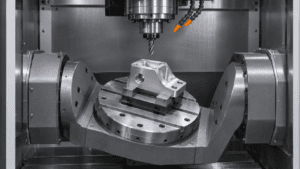
- Plan material removal: consider balanced removal from opposing faces where the design permits it.
- Separate roughing and finishing: leave enough allowance to correct movement revealed after roughing and release.
- Control clamping: avoid forcing a flexible blank flat and mistaking the restrained shape for its free-state geometry.
- Manage temperature: agree on inspection conditions so temperature differences do not confuse dimensional acceptance.
Time between operations can help expose movement; it does not certify the stock as T651 or prove that all residual stress has disappeared. Do not add an improvised thermal stress-relief cycle without engineering approval, because heating can affect the required temper and properties.
For demanding plate components, supplier-specific stock quality can also matter. Kaiser’s general engineering plate information emphasizes residual stress and flatness as machining-related product characteristics. Ask what is controlled for the quoted stock rather than assuming every T651 plate offers identical performance.
Three Practical Material Selection Examples
These are illustrative decisions, not customer case studies or guaranteed manufacturing results.
A compact mounting block
A relatively thick block has mounting holes, two milled faces and modest stock removal. If the specified T6 product meets the mechanical and dimensional requirements, it may be a reasonable choice. Confirm the exact available temper; there is little value in demanding a different stock route without identifying a functional benefit.
A pocketed equipment housing
A housing starts from plate and finishes with a thin floor and narrow walls. Much of the material is removed from one side. T651 plate deserves consideration together with staged machining, appropriate support and inspection after release. The quote should explain how the supplier will protect the sealing face and mounting datums.
A long part made from an extruded profile
An extrusion close to the final shape may reduce waste compared with machining the entire part from plate. Here, evaluate the specified extrusion temper, potentially T6511, and its straightness requirements. Choosing T651 plate solely because it sounds more stable may create unnecessary machining and purchasing cost.
What to Put on the Drawing and RFQ
A material line reading “6061-T6 or equivalent” leaves important decisions unresolved. Provide enough information for suppliers to quote the same accepted component:
- Exact alloy and temper, with any permitted alternatives approved explicitly.
- Required product form and applicable material specification.
- Material certification and traceability requirements.
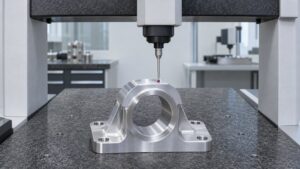
- Critical sizes, datum relationships, flatness and parallelism limits.
- Whether acceptance applies in the free state or under defined assembly restraint.
- Surface treatment and whether dimensions apply before or after coating.
- Order quantity, delivery requirements and any first-article inspection needs.
For example, a free-state flatness requirement should be checked using an agreed support arrangement without pulling the part flat to the inspection surface. If the functional requirement instead concerns the assembled condition, define that restraint. The distinction can affect both the process and the quotation.
Compare Finished-Part Cost, Not Just Stock Price
There is no dependable universal percentage premium for T651 over T6. Product form, dimensions, stock availability, order quantity and certification affect the comparison. A readily available T651 plate can be a more practical purchase than a less suitable product requiring extra preparation.
Ask suppliers to identify the stock they are quoting and the expected machining stages. Include the cost of additional setups, corrective machining, inspection and potential scrap. Paying for a suitable material route may reduce total cost, but that benefit should be demonstrated for the actual component.
Frequently Asked Questions
Can 6061-T651 replace 6061-T6?
Possibly, subject to the governing specification and design approval. Confirm product form, mechanical requirements and documentation. Do not treat similar strength expectations as automatic permission to change the drawing.
Will T651 prevent all warping?
No. Remaining residual stress, asymmetric removal, clamping, cutting conditions and temperature can still affect the result. Specify the required finished geometry and verify it under the agreed inspection conditions.
Is a flat incoming plate proof of stability?
No. Initial flatness describes the starting geometry; it does not establish how the plate will respond when material is removed. For a sensitive design, a representative first article can help validate the proposed route.
Choose the Temper Around the Finished Component
For 6061 T6 vs T651, start with stock form, material removal and dimensional requirements. Evaluate T651 particularly when plate machining makes stability important, while checking T6511 for suitable extruded products. Send Easiahome your drawing, requested temper, quantity and inspection requirements so the material and machining route can be reviewed together.