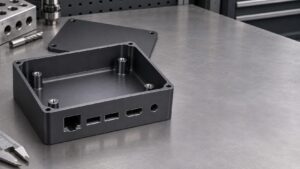
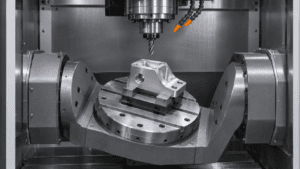
An investment casting quotation is only useful when it covers the part you intend to buy. A price for a cleaned casting cannot be compared directly with a price that includes heat treatment, CNC machining, passivation and inspection reports. Both suppliers may have quoted correctly, but they have priced different deliverables.
This investment casting RFQ checklist explains what to send so a foundry can review your requirements and prepare a comparable quotation. Start with the finished part, identify the required supply condition, and make any unresolved requirements visible before tooling begins.
Investment Casting RFQ Checklist at a Glance
An RFQ, or request for quotation, should bring the engineering requirements and purchasing conditions into one package. Use this checklist before sending your inquiry.
| RFQ item | What to include |
|---|---|
| Part identification | Part name, number, revision and units. |
| Supply condition | As-cast, heat-treated, machined or fully finished parts. |
| Drawings and models | Current 2D drawing and matching 3D model; casting drawing if available. |
| Material | Cast alloy grade, governing specification, heat treatment and required properties. |
| Dimensions and machining | Critical tolerances, datums, machined surfaces and surface roughness. |
| Quality requirements | Inspection scope, testing, acceptance criteria and required records. |
| Surface condition | Cleaning, coatings, polishing, passivation and cosmetic requirements. |
| Quantity | Sample quantity, order quantity, price breaks and expected repeat demand. |
| Tooling and approval | New or existing tooling, ownership terms and sample approval requirements. |
| Delivery and commercial terms | Required dates, destination, packing and requested quotation breakdown. |
1. Define Exactly What the Supplier Must Deliver
State the supply condition near the beginning of the inquiry. “Investment cast valve body” describes a component, but it does not define whether the supplier must deliver a casting blank or a finished part ready for assembly.
Identify which operations belong in the quotation: casting, gate removal, heat treatment, machining, finishing, testing, marking and packing. If another company will perform the machining, explain where the foundry’s responsibility ends and what condition the machining supplier expects to receive.
For a fully finished component, ask the supplier to quote against the final drawing, including the secondary operations it identifies. For a casting-only order, define the blank’s delivery and acceptance requirements separately. This distinction prevents later disagreement over whether a feature should have been machined or supplied with stock remaining.
2. Send Matching Drawings and 3D Models
Provide a dimensioned PDF drawing and, where available, a 3D solid model in an agreed format such as STEP. The model communicates shape; the drawing communicates tolerances, material, surface requirements and other instructions that may not be present in the geometry.
Check the part number, revision and units across the files. If an older sample or drawing is included for reference, label it clearly. State how conflicts between the model, drawing and RFQ notes should be resolved rather than leaving the supplier to choose.
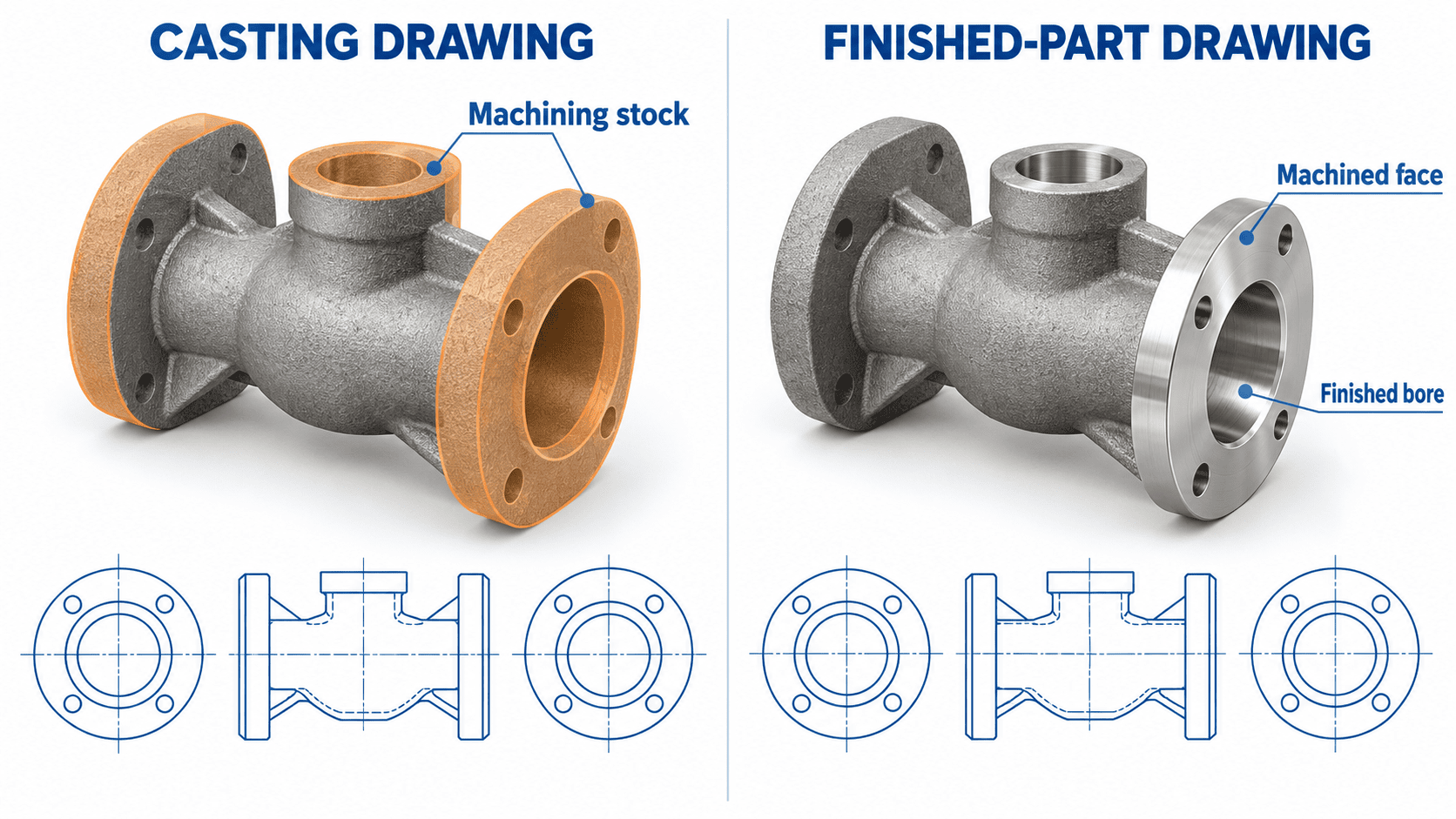
A casting drawing and a finished-part drawing serve different purposes. The first defines the blank before machining. The second defines the delivered geometry after machining and other specified operations. Send both if they exist.
If you only have a finished-part model, say so. Ask the foundry to propose the casting geometry and machining stock for review. You do not need to invent shrinkage factors, gates or feeding arrangements to make the inquiry complete. Those process decisions require foundry input.
If the inquiry starts from a physical sample, identify it as a reverse-engineering project. Discuss drawing creation, material identification and approval of the reconstructed design before treating a manufacturing price as final.
3. Specify the Cast Alloy and Required Delivery Condition
Include the material specification and grade required by your design. A description such as “stainless steel” leaves too much open. Also identify the required heat-treatment condition and any mechanical-property or hardness requirements.
Be careful when converting a part previously machined from bar stock into a casting. A familiar wrought-material designation should not be assumed to define the correct cast-material specification. Ask engineering and the foundry to confirm the applicable cast grade and acceptance requirements.
Explain the service conditions that matter, such as exposure to seawater, cleaning chemicals, elevated temperature or repeated loading. This information supports a material review; it does not replace the approved specification. If alternative materials may be considered, request them as separately identified options.
For traceable parts, specify the material documentation required with delivery. Clarify whether chemical analysis, mechanical test results, heat-treatment records and heat-number identification are needed. A generic statement that the material is compliant may not satisfy a customer’s required documentation package.
4. Separate Casting Tolerances from Finished-Part Requirements
Mark the features that control fit, sealing, alignment or movement. These deserve particular attention during quotation because they can influence machining, fixturing and inspection.
Show which surfaces remain as cast and which require machining. Define finished dimensions and datums for machined features, together with surface roughness where it affects function. Do not apply a tight finished-part tolerance indiscriminately to every surface of the casting.
If a general casting-tolerance standard is specified, give the edition and the applicable grades or drawing references. ISO 8062-3:2023 addresses general casting tolerances and machining-allowance grades for indicated dimensions. Naming a standard alone does not select every requirement for your part.
Ask the supplier to identify features that need clarification or a different manufacturing approach. Any proposed change to a tolerance, datum or geometry should be recorded as a quotation deviation requiring approval.
5. Define Inspection, Testing and Acceptance
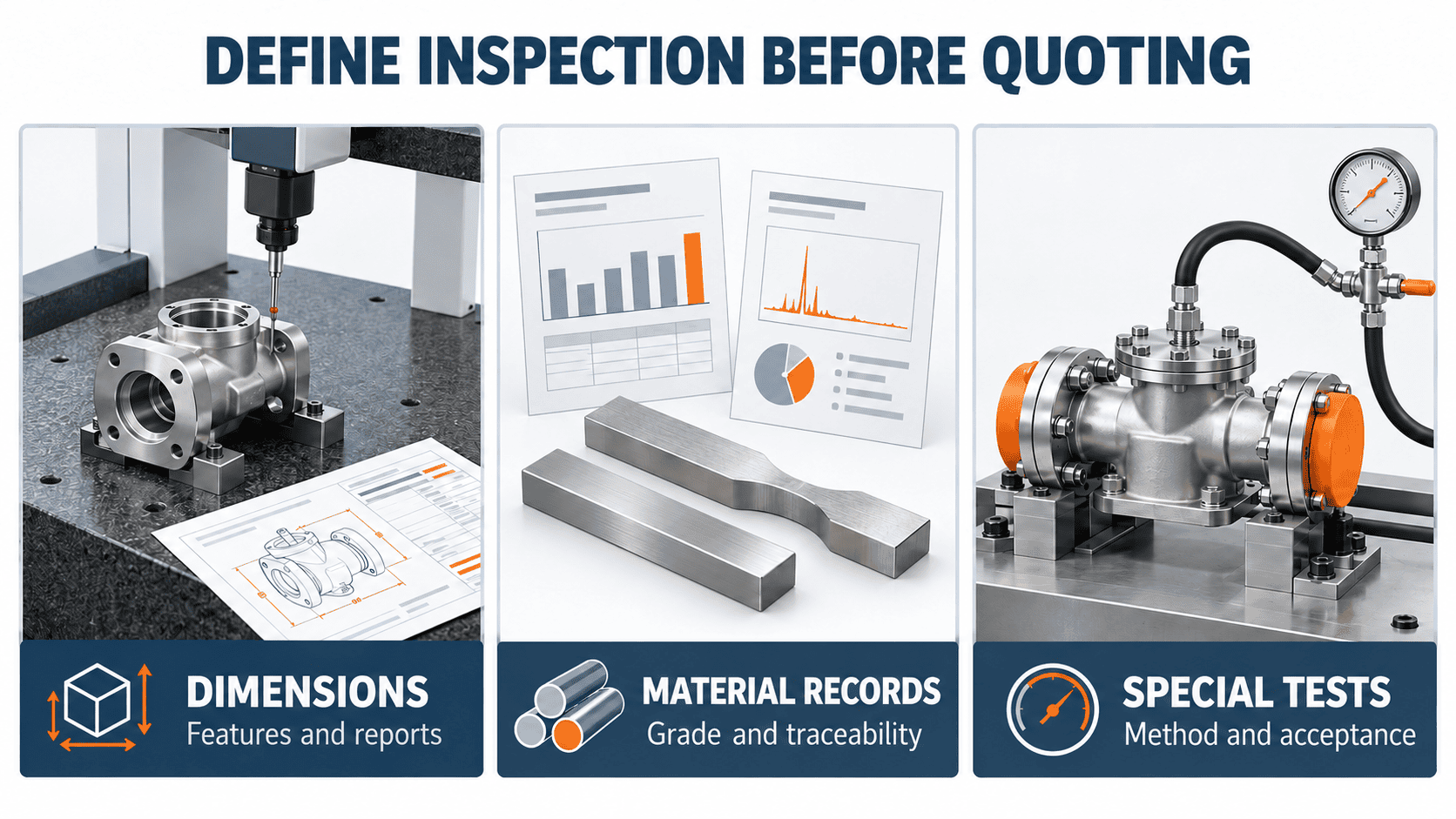
“Inspect before shipment” is too vague for a part with critical features. Identify the dimensions to report, the required inspection stage and whether the order needs sample approval before the remaining production quantity is released.
For a first-article submission, specify the expected records. These might include a ballooned drawing, dimensional results, material records and reports for specified special processes. State whether you require a customer form or an industry-specific format.
Dimensional conformity does not establish internal soundness or leak tightness. If penetrant inspection, radiography, leak testing or pressure testing is required, define the relevant areas, procedures, acceptance criteria and inspection extent. For testing, provide the applicable specification or agree on the missing conditions during technical review.
For example, a pump housing RFQ may need to distinguish an external cosmetic surface from a machined sealing face. A defect acceptable on the first may be unacceptable on the second. Identify these zones on the drawing rather than relying on “good casting quality” as the acceptance rule.
Easiahome’s quality assurance page describes its inspection and testing activities. Include your required scope in the inquiry so the quotation can address the specific part.
6. Describe the Required Finish and Appearance
Identify whether the part requires blasting, polishing, passivation, plating, painting or another treatment. Include the applicable process specification and any surfaces that must be masked or protected.
Clarify whether dimensions and roughness requirements apply before or after finishing. Also distinguish functional finish from appearance. “Mirror finish” or “satin finish” may need an approved reference sample, agreed inspection conditions and identified cosmetic zones.
For visible hardware, show which faces will be exposed after installation. State restrictions on gate-removal marks or other visible features where necessary. Clear local requirements give the foundry a more useful quotation basis than a blanket demand for a flawless surface.
7. Give Quantities, Tooling Information and Approval Milestones
Separate the number of samples from the first production order. Include requested quantity breaks and expected repeat demand, but label forecasts as estimates. Annual demand and release quantity are different: a forecast for several thousand parts does not mean the foundry will make or ship them in one batch.
Tell the supplier whether tooling already exists. If it does, provide available drawings, ownership information and its known condition. Existing tooling may need review or modification before it can be used for a new order or at another foundry.
For new tooling, request separate pricing and agree on ownership, storage, maintenance and responsibility for future design changes. Define who approves the casting design, tooling and samples, and what evidence is required at each stage.
State the requested sample date and production delivery date separately. Ask the foundry to explain when its quoted lead time starts and which approvals or customer inputs it assumes. A target date in an RFQ is a request for feasibility review, not an agreed delivery commitment.
8. Request a Quote You Can Compare
Specify the delivery destination, packing, marking and transport responsibilities. Where an Incoterms rule is requested, include the named place and edition. Ask the supplier to identify whether freight, duties or other charges are included.
Request a clear breakdown of tooling, samples, production unit prices, special testing, documentation and shipping where applicable. Also ask for quotation validity, payment terms, exclusions and technical assumptions.
A useful comparison checks the complete delivery scope before comparing unit prices. If one supplier excludes machining or inspection records, request a revised quotation or account for those costs separately. Do not treat an undocumented exclusion as a saving.
A Copyable Investment Casting RFQ Template
Replace the bracketed fields and attach the referenced documents before sending.
Subject: Investment Casting RFQ – [Part Number / Revision]
Please quote [part name], part number [number], revision [revision].
Supply scope: [Casting only / heat-treated casting / fully machined and finished part].
Attachments: [Finished drawing, casting drawing if available, 3D model and specifications].
Material: [Cast grade, specification, heat treatment and required properties].
Critical requirements: [Machined features, datums, tolerances, roughness and cosmetic zones].
Inspection and testing: [Reports, test specifications, acceptance criteria and inspection extent].
Finish: [Surface treatment, masking and marking].
Quantities: [Samples, first order, price breaks and estimated repeat demand].
Tooling: [New tooling required / existing tooling available].
Schedule: [Requested sample and production dates, with approval milestones].
Delivery: [Destination, requested trade terms and packing requirements].Please separate tooling and other one-time charges from production prices. Identify any missing information, proposed deviations, exclusions and lead-time assumptions.
Send Your Investment Casting Inquiry to Easiahome
Prepare your latest drawing and model, material specification, order quantities, supply scope and inspection requirements. Mark unresolved points so they can be reviewed before the quotation becomes an order.
For a new project, explore Easiahome’s investment casting services and send your RFQ package to [email protected]. Ask for a quotation that identifies the included operations, tooling charges and approval milestones.
Frequently Asked Questions
Q:Can I request an investment casting quote with only a 3D model?
A: A model can support an initial review. A firm quotation may need additional information about material, tolerances, inspection, finishing and quantity. If these are undecided, request a budgetary estimate and ask the supplier to list its assumptions.
Q: Do I need to prepare a casting drawing myself?
A: Not necessarily. Provide the finished-part requirements and ask the foundry to develop or review the proposed blank. Agree on who approves machining allowances, locating features and the casting drawing before tooling is released.
Q:Should tooling be included in the unit price?
A: Either arrangement can be quoted, but the basis must be clear. Request the tooling charge separately, or ask how it is recovered through unit pricing and what happens if quantities change.
Q:What if the design is still changing?
A:Identify the design as preliminary and request a quotation with stated assumptions. Ask which changes could affect tooling, process development or sample approval. Use a controlled revision for the eventual production order.