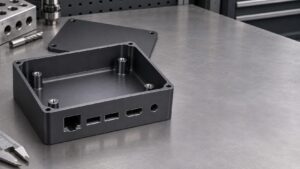
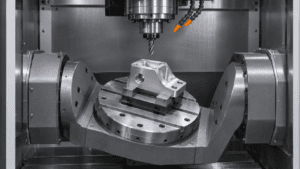
Low volume CNC machining helps buyers obtain functional parts without committing immediately to a large production order. It can support a pilot build, a product launch, replacement components or recurring demand that does not justify a high-volume manufacturing route. The challenge is making a small batch economical while preserving the quality needed for assembly and use.
A successful order needs more than a competitive unit price. The supplier and buyer must agree on the drawing revision, material condition, critical features, finishing, inspection and what changes between the first sample and repeat production.
This guide explains how to plan low volume CNC machining from the first quotation to the next purchase order. It focuses on decisions purchasing teams and mechanical engineers can make before releasing drawings, approving samples or increasing quantities.
Discuss your small-batch machining project with EASIAHOME. Start with the material, part quantity and intended use. If drawings are confidential, agree on the information-sharing process before sending detailed files.
What is low volume CNC machining?
Low volume CNC machining is the manufacture of a relatively small number of components using computer-controlled cutting operations such as milling and turning. “Low volume” describes the order in context; it is not a universal quantity range.
For a large, complex housing, a few dozen parts may represent a substantial project. For a simple turned pin, the same quantity may be a very small run. Geometry, setup effort, inspection and downstream processing matter as much as the number of pieces.
Buyers typically consider this route when they need the specified production material, want to validate an assembly, expect design changes, or have demand spread across several smaller releases. However, small quantity does not mean simple manufacturing. A ten-piece order can still require dedicated fixtures, specialist tools and a careful inspection plan.
When does a small machining batch make sense?
Choose a manufacturing route based on the purpose of the parts. If you only need to evaluate shape and hand clearance, a visual model may answer the question. If you must test a loaded interface, a sealing surface or a production thread, material and process differences may affect how useful the test result is.
| Project situation | Why machining may fit | Question to resolve first |
|---|---|---|
| Functional prototypes | Parts can be made in a specified machinable material | Does the process represent the intended production condition? |
| Pilot assembly | A controlled batch supports assembly and test planning | Which dimensions and functions must the pilot validate? |
| Uncertain launch demand | Smaller releases can limit inventory exposure | What is the total cost of repeated setups? |
| Service and replacement parts | Demand may be intermittent rather than continuous | Is the original drawing current and complete? |
| High-mix product families | Related components may share process knowledge | Can common stock or fixtures be used without compromising requirements? |
Low volume CNC machining is less attractive when the geometry requires excessive material removal and a qualified alternative can make the part more efficiently. Compare complete routes rather than assuming either machining or tooling is always cheaper.
1. Separate prototype questions from production requirements
Before requesting a price, write down what the first batch needs to prove. The answer should be more specific than “check quality.” You might need to verify installation clearance, bearing fit, fastener access, pressure sealing or the cosmetic appearance after finishing.
Then distinguish temporary prototype concessions from the final product specification. An unfinished sample may be appropriate for an early fit test, but it cannot demonstrate the appearance or dimensional effects of a later coating.
Ask whether the prototype and production route will use the same material, workholding approach and secondary processes. If the routes differ, record what the prototype can and cannot validate. This prevents a successful sample from being treated as evidence for a process that has not yet been tested.
Buyer action: attach a short validation brief to the RFQ. Name the tests, who performs them and what must be approved before the next stage.
2. Understand what drives the cost per part
For low volume CNC machining, fixed preparation costs are distributed across fewer accepted parts. This is one reason a small batch can have a higher unit price even when the material is inexpensive.
A useful planning model is:
Cost per accepted part = (one-time preparation + batch-level costs + recurring production costs) ÷ accepted quantity.
This is a comparison framework, not a supplier quotation. The actual price also reflects commercial conditions, capacity, risk and the agreed scope.
- Preparation: drawing review, programming, fixture development and inspection planning.
- Batch-level work: machine setup, material procurement and minimum charges for outside processing.
- Recurring work: cutting time, handling, tool consumption, deburring and inspection.
- Delivery scope: packaging, documentation, freight and other agreed charges.
Ask the supplier to identify which costs recur on every release and which are genuinely one-time. A fixture charge does not necessarily cover all future setup work, and a repeat order may still require verification before production restarts.
Request price breaks at realistic quantities. Comparing 10, 25 and 50 pieces is useful only if those quantities reflect decisions you may actually make. Keep the material, drawing revision, finish and inspection requirements identical across the comparison.
3. Use design changes that preserve function
Design for manufacturability can reduce cost, but it should not become an excuse to remove requirements without engineering approval. Ask the supplier to identify difficult features and explain the proposed change.
| Feature to review | Possible manufacturing effect | Useful discussion |
|---|---|---|
| Deep, narrow pockets | Long tools and limited rigidity may increase machining effort | Could depth, width or corner radius change? |
| Several machining orientations | Additional setups may add handling and alignment work | Can datum access or feature placement improve? |
| Very thin walls | Clamping and cutting forces may affect shape | How will the part be supported and measured? |
| Unnecessary tight tolerances | May increase process control and inspection effort | Which features determine fit and function? |
| Unclear edge requirements | Different interpretations of deburring can produce different results | Which edges need a defined break, radius or sharp condition? |
Request separate prices for the original drawing and an approved alternative when the difference matters. This makes the tradeoff visible. The supplier should not quote the alternative as though it fully meets the original requirement.
Review CNC machining capabilities alongside your component geometry. Equipment selection should follow the part requirements, rather than the other way around.
4. Select material grade and condition before comparing quotes
An RFQ that says “aluminum part” leaves too much open. Specify the grade, condition, stock form where relevant and any governing material requirements.
For low volume CNC machining, stock availability can influence both price and schedule. Ask whether the quotation assumes material already available or material that must be ordered. If a substitute is suggested, have your engineering team review it before approval.
Consider the complete route. A heat treatment after machining may require additional planning. A surface treatment may affect fit, appearance or masking requirements. The point is not to predict every effect from a material name, but to make the supplier’s assumptions explicit.
If material certificates or lot traceability are required, state that at quotation stage. Ask how records will connect to the batch and whether identification will remain through subcontracted operations.
5. Control critical tolerances without overspecifying the whole part
A useful drawing communicates functional priorities. Identify the mating surfaces, locating features and relationships that determine assembly performance. Keep appropriate general tolerances for other dimensions.
A supplier cannot establish capability from a tolerance value alone. Part size, shape, material, access, clamping and measurement conditions all matter. Ask for confirmation against your actual drawing rather than a general statement about machine accuracy.
State the applicable drawing standard and revision. The ASME Y14 standards collection includes standards relating to dimensioning, tolerancing and engineering documentation. Use the standard specified by your design authority; do not assume every supplier interprets an unstated convention identically.
Clarify whether acceptance applies before or after finishing. A dimension may be easy to measure on an unfinished sample yet fail to represent the delivered production part.
Question for the supplier: “Which features are most difficult to hold, and how will their final condition be inspected?” A specific answer is more useful than a blanket promise.
6. Agree on fixtures, programs and repeat-order ownership
For a small batch, a dedicated fixture can look expensive. It may still be justified when it improves location, protects a delicate part or reduces handling. Ask what the fixture accomplishes and whether a simpler setup can meet the same requirements.
If tooling is charged separately, confirm ownership, permitted use, storage arrangements, maintenance and what happens if the supplier relationship ends. Do not assume that paying a tooling charge automatically defines all of these terms.
Also ask what process information will be retained for repeat orders. This may include setup instructions, approved programs, inspection routines and photographs of the workholding arrangement. The commercial agreement should define which items are deliverables and which remain supplier know-how.
For a later release, confirm the revision and quantity again. A retained program does not prove that the material, tools, capacity and inspection conditions are unchanged.
7. Build an inspection plan that suits the batch
Low volume CNC machining needs clear acceptance evidence. A small quantity does not eliminate the need for inspection, but neither does it automatically justify measuring every characteristic on every part.
Agree the scope according to risk: which characteristics require full coverage, which use an agreed sample and which records accompany the shipment. If you require a particular first-article or customer approval process, name it before placing the order.
Inspection methods should fit the characteristic. A CMM may be useful for geometric relationships, but thread checks, surface texture and other features may need different methods. Ask for the method, not simply the equipment list.
A usable report identifies the part, revision, units, limits, results and inspected quantity. If results fall outside the requirement, agree how the supplier will seek disposition before shipping.
Important distinction: a dimensional report, material certificate and certificate of conformity serve different purposes. Specify each required document separately.
8. Approve the sample against a written baseline
Sample approval is strongest when both parties know what has been accepted. An email saying “looks good” can leave uncertainty over dimensions, appearance and function.
Record the drawing revision, sample identifiers, inspection results and any approved deviations. Separate dimensional approval from assembly testing and cosmetic acceptance.
If a sample has an accepted deviation, state whether it applies only to that sample or to later production as well. Without this distinction, an exception can accidentally become the assumed production standard.
Where appearance matters, agree the viewing conditions and reference samples where appropriate. Photographs help communication, but lighting and display differences can make them an incomplete acceptance reference.
Only release the next batch after unresolved issues have an agreed action. If the production route changes, determine whether another validation step is needed.
9. Plan lead time from material purchase through arrival
A quoted production lead time is only meaningful when its starting conditions are clear. It may depend on drawing approval, material availability, payment or sample acceptance.
Ask for milestones covering procurement, setup, machining, outside processing, inspection, packing and dispatch. Separate transit time from factory production time.
For low volume CNC machining, minimum batch sizes or processing schedules at a finishing supplier may affect delivery. A short cutting cycle does not necessarily produce a short total lead time.
If you have an assembly deadline, provide the required arrival date and destination. Ask which dates are confirmed and which remain estimates. Allow room in your plan for incoming checks and sample review rather than assuming delivery and approval happen simultaneously.
For repeat supply, discuss whether consolidated manufacturing with staged deliveries is appropriate. Compare the potential cost benefit with storage, payment, revision and inventory-obsolescence risks before committing.
10. Decide when to keep machining and when to compare alternatives
Increasing quantity does not automatically mean switching away from machining. Conversely, a successful machined prototype does not prove machining is the best long-term route.
Revisit the process when recurring demand becomes clearer, the design stabilizes or material removal dominates the cost. Depending on the component, it may be worth evaluating casting, forging or another qualified process followed by machining.
Compare tooling, qualification, recurring work, yield, inspection, material properties and change flexibility. A proposed route should be assessed against the complete product requirement, including any requirements tied to the manufacturing process.
There is no universal break-even quantity. For a related comparison, read CNC machining versus investment casting by cost and lead time.
Example: planning a small batch of mounting housings
The following is an illustrative sourcing scenario, not a customer case study or a price offer.
A buyer needs 20 machined housings for an assembly trial and may order 100 more after testing. The housing includes a locating bore, a mounting face, threaded holes and a cosmetic finish.
Instead of requesting one price for “120 housings,” the buyer separates the project:
- Drawing review: resolve bore acceptance after finishing, datum references and cosmetic requirements.
- Initial batch: quote 20 parts with clearly identified setup and inspection costs.
- Validation: inspect the parts and complete the buyer’s assembly trial.
- Repeat order: reconfirm the revision and quote 100 parts with any genuinely reusable preparation identified.
The 100-piece forecast is not treated as a committed order. The quotation explains which costs can carry forward and which recur. If the design changes after the trial, the supplier assesses the effect on the fixture, program and schedule before production restarts.
This makes low volume CNC machining a controlled learning stage rather than an informal promise of future volume.
RFQ checklist for low volume CNC machining
A complete inquiry helps a supplier assess feasibility and provide a more comparable quotation. Prepare:
- Part number, drawing revision and a concise description of function.
- A dimensioned PDF drawing and a 3D model where available.
- Material grade, condition and required documentation.
- Quantity for the current order and separately labeled future estimates.
- Surface treatment, masking and cosmetic requirements.
- Critical characteristics, inspection scope and reporting format.
- Required arrival date, destination and packaging needs.
- Whether design alternatives may be proposed for your approval.
- Confidentiality requirements before detailed files are transferred.
Agree which file controls if the model and drawing disagree. Do not assume a model communicates all tolerance, thread, finish and acceptance requirements.
Start your small-batch project with EASIAHOME
If you are evaluating low volume CNC machining for a prototype, pilot build or recurring component, contact EASIAHOME to discuss your drawing and order requirements.
Tell us the part material, current quantity, intended use and required inspection records. Ask for feasibility comments and a quotation that separates preparation costs, production scope and lead-time assumptions. If you need an NDA, raise it before sending confidential geometry.
Suggested subject: Small-Batch CNC RFQ – [Part Number / Revision] – [Material] – [Quantity]
Suggested message: “We need [quantity] parts for [prototype / pilot / repeat production]. Please review the drawing for manufacturing questions, confirm the proposed material and finish, identify any one-time costs, and state inspection and delivery assumptions. Our required arrival date is [date]. Future demand is an estimate of [quantity], subject to approval.”
A useful first response should clarify whether the component fits the proposed manufacturing route and what needs to be resolved before a firm quotation or sample plan can be agreed.
Frequently asked questions
What quantity counts as low volume CNC machining?
There is no fixed threshold. The relevant quantity depends on the part, setup effort, material and production economics. Give the supplier your actual order quantity rather than relying on a broad label.
Why is the price per part higher for a small order?
Preparation and batch-level costs are distributed across fewer parts. Ask which charges are one-time and which recur, then compare realistic quantity breaks using the same specification.
Can I use the same supplier for prototypes and repeat production?
Potentially, but confirm the production route, inspection scope and repeat-order controls. A prototype may use different tooling or setups, and any change affecting acceptance needs appropriate review.
Can a supplier quote from a 3D file alone?
An initial review may be possible, but the file may not define all requirements. Supply a controlled drawing or another agreed product definition covering tolerances, materials, finishes and acceptance criteria before release.
Should I order extra parts to reduce the unit price?
Compare total expenditure and demand risk. A lower unit price can still mean more cash tied up in inventory that becomes obsolete after a design change. Quote alternative quantities before deciding.
Are tooling and programming free on repeat orders?
Do not assume so. The quotation and agreement should define what is reusable, what is retained and which setup or verification costs apply to each release.
Can I change the drawing after sample approval?
Yes, through an agreed change process. Issue a new revision and obtain confirmation of its effect on material, work in progress, tooling, inspection, price and delivery before authorizing further work.
Final purchasing checklist
Before releasing a low volume CNC machining order, confirm the revision, material, quantity, finish, critical features, inspection evidence, cost breakdown and schedule. Before repeating it, confirm what has changed.
A well-planned small batch should produce usable parts and a clear baseline for the next order. The value comes from resolving manufacturing questions early, not merely purchasing the lowest available quantity.