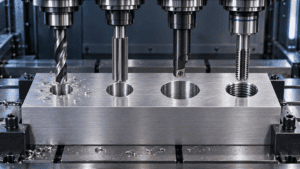
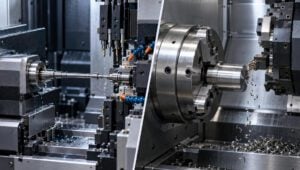
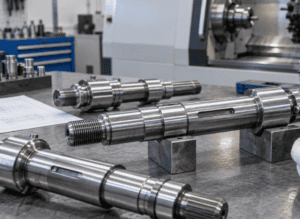
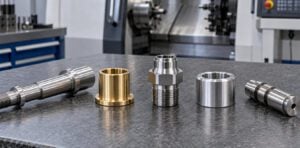
CNC bar turning is one of the most efficient ways to manufacture round, threaded, stepped, and precision shaft-like parts from bar stock. Instead of cutting each blank separately and loading it by hand, the machine feeds round, hex, or square bar material through the spindle and machines each part in sequence. For the right geometry and volume, this approach improves consistency, reduces handling, and lowers unit cost.
For buyers, engineers, and sourcing teams, the key question is not simply whether a part can be CNC turned. The more useful question is whether the part is a good fit for bar-fed CNC turning, Swiss turning, or a mill-turn process. Choosing the right route affects tolerance control, surface finish, lead time, inspection method, and quote accuracy.
This guide explains what CNC bar turning is, which parts are suitable, how it differs from standard CNC turning and Swiss turning, what design choices affect cost, and what information to send for a faster quote.
What Is CNC Bar Turning?
CNC bar turning is a turning process that machines parts directly from continuous bar stock. The bar is held in the spindle or guide bushing, fed forward by a bar feeder, and cut off after each part is completed. The next length of material is then advanced automatically, allowing repeated production with minimal manual loading.
The process is commonly used for cylindrical parts such as shafts, bushings, spacers, pins, fittings, fasteners, nozzles, sleeves, connectors, and threaded components. It is especially useful when the part has rotational features such as outside diameters, grooves, shoulders, tapers, threads, bores, and chamfers.
Depending on the machine configuration, CNC bar turning can also include cross holes, flats, slots, milled pockets, wrench flats, and radial features using live tooling. When a turned part also needs several milled features, a mill-turn machine can often complete it in fewer setups than separate lathe and milling operations.
CNC Bar Turning vs CNC Turning vs Swiss Turning
The terms are related, but they are not identical. Understanding the difference helps you choose the right manufacturing route before requesting a quote.
| Process | Best fit | Typical advantage |
|---|---|---|
| CNC turning | General round parts, blanks, castings, forgings, or cut bar pieces | Flexible for low to medium volume and larger workpieces. |
| CNC bar turning | Repeat parts made from bar stock | Efficient feeding, consistent setup, and lower unit cost at volume. |
| Swiss turning | Small, slender, high-precision parts | Guide bushing supports the material close to the cut, reducing deflection. |
| Mill-turn machining | Turned parts with holes, flats, slots, and off-center features | Combines turning and milling to reduce secondary setups. |
A simple spacer may only need standard CNC bar turning. A long medical pin or miniature connector may be better suited to Swiss turning. A hydraulic fitting with cross holes and wrench flats may need live tooling or mill-turn machining. For a broader process view, see Easiahome’s CNC machining services.
Parts That Are Suitable for CNC Bar Turning
CNC bar turning is strongest when the part begins as standard bar stock and most of the geometry is concentric around the turning axis. The process is also attractive when the order quantity is high enough to justify machine setup and bar feeder preparation.
| Part type | Common features | Why bar turning works |
|---|---|---|
| Shafts and pins | Stepped diameters, chamfers, grooves, threads | Diameters are concentric and repeatable from bar stock. |
| Bushings and sleeves | Outside diameter, bore, groove, face features | Turning controls roundness, bore alignment, and surface finish. |
| Spacers and standoffs | Simple OD, ID, length, chamfers | Bar-fed production keeps unit cost low. |
| Fittings and connectors | Threads, sealing faces, hex stock, cross holes | Turning plus live tooling can complete many features in one setup. |
| Nozzles and inserts | Tapers, small bores, threads, grooves | Good fit for precise axial geometry and repeat production. |
| Fastener-style parts | Heads, threaded shanks, shoulders, recesses | Bar stock feeding is efficient for high-volume repeat parts. |
Parts are usually less suitable for CNC bar turning when they are block-shaped, heavily milled, very thin-walled, much larger than available bar sizes, or require extensive features far from the centerline. In those cases, CNC milling, casting plus machining, forging plus machining, or a different process may be more economical.
Materials Used for CNC Bar Turning
CNC bar turning can process many engineering metals and plastics. Common materials include aluminum, brass, copper alloys, carbon steel, stainless steel, alloy steel, titanium, POM, PTFE, nylon, and other machinable plastics. Material choice affects tool life, cutting speed, burr formation, surface finish, and dimensional stability.
Free-machining materials such as brass and some aluminum alloys are usually easier to turn at high speed. Stainless steel, titanium, and hardened alloys require more conservative cutting parameters and may increase cost. Plastic bar stock may need extra control for heat, clamping pressure, and burrs, especially on thin sections or small threads.
Key Design Factors That Affect Cost
CNC bar turning cost is driven by more than part size. The main cost factors are material diameter, machining time, tool changes, secondary operations, inspection requirements, and production quantity.
- Bar diameter: Choose a standard bar size close to the largest outside diameter. Oversized bar stock increases material waste and cycle time.
- Length-to-diameter ratio: Long, slender parts can deflect during cutting. Swiss turning or additional support may be needed for tight tolerance shafts.
- Deep bores: Long small-diameter holes are slower to machine and harder to inspect. Define which bore surfaces are functional.
- Threads: Standard threads are easier to quote and inspect. Special thread forms, tight thread classes, and deep internal threads add complexity.
- Grooves and undercuts: Retaining-ring grooves, O-ring grooves, and relief cuts are common, but the tool must have enough access. See our guide to CNC machining undercuts for more detail.
- Off-center features: Cross holes, flats, slots, and radial holes may require live tooling or a second setup.
- Surface finish: A normal machined finish is faster than a sealing surface, polished surface, or cosmetic finish.
- Tolerances: Tight diameter, concentricity, runout, or positional tolerances increase machining and inspection time.
If the part has only one or two critical surfaces, call them out clearly. Applying tight tolerances to every diameter and length can increase cost without improving function. For practical tolerance planning, review Easiahome’s CNC machining tolerances guide.
Design Tips for Lower-Cost CNC Bar Turning
Good design for bar turning keeps the functional requirements clear while giving the machinist enough room to use stable tools and standard inspection methods.
- Use standard material diameters and standard material grades when possible.
- Keep the largest outside diameter close to available bar stock size to reduce waste.
- Avoid unnecessary deep narrow grooves, sharp internal corners, and very long small bores.
- Use standard thread sizes and thread classes unless a special fit is required.
- Add chamfers or edge breaks to reduce burr risk and improve assembly.
- Separate critical and noncritical dimensions on the drawing.
- Use realistic surface roughness requirements based on function.
- Group radial holes or milled features so they can be machined efficiently with live tooling.
- Consider Swiss turning for small, long, slender parts with tight diameter control.
- For high-volume parts, ask whether a small design change can reduce cycle time.
These changes are usually minor in CAD, but they can make a meaningful difference in machining stability, scrap rate, inspection time, and quote competitiveness.
Quality Control for CNC Bar Turned Parts
Bar-turned parts often include features where alignment matters. Common inspection items include outside diameter, bore diameter, overall length, shoulder location, thread fit, concentricity, runout, surface roughness, and burr condition. For production orders, first article inspection and in-process checks help confirm that tool wear and thermal drift are under control.
Inspection method should match the function. A simple spacer may only need caliper and micrometer checks. A sealing sleeve may require bore gauges, surface roughness testing, and tighter control of chamfers. A rotating shaft may need runout measurement and concentricity review. A threaded connector may require go/no-go gauges or thread inspection.
If the drawing includes GD&T, datums should be practical to hold and measure. Overly complex datum structures can slow quoting and create avoidable inspection cost. When in doubt, share the mating part or assembly purpose with the supplier so the inspection plan supports the real function.
CNC Bar Turning Quote Checklist
A complete quote package reduces back-and-forth and helps the supplier choose the right process from the start. For CNC bar turning, include:
- STEP file or other accurate 3D CAD model.
- 2D technical drawing with critical dimensions and tolerances.
- Material grade, heat treatment, and any certificate requirements.
- Quantity for prototype, pilot run, and production if known.
- Surface finish, coating, plating, passivation, anodizing, or deburring requirements.
- Thread standards, thread class, and gauge requirements.
- Critical features such as sealing diameters, bearing fits, runout limits, or datum surfaces.
- Inspection report needs, such as first article inspection, CMM report, material certificate, or PPAP-style documentation.
- Target lead time and expected repeat order schedule.
If you do not have a finished drawing, send the STEP file with notes explaining the part function, mating components, critical surfaces, and expected quantity. For more detail, see our guide on preparing files for a CNC machining quote.
When Should You Choose CNC Bar Turning?
Choose CNC bar turning when your part is mostly round, made from standard bar stock, repeated in medium or high quantities, and requires good dimensional consistency. It is also a strong choice when several diameters, grooves, threads, bores, and chamfers need to stay concentric.
Consider Swiss turning when the part is small, slender, and precision-critical. Consider mill-turn machining when the part has several radial or off-axis features. Consider CNC milling or another process when the part is not rotational, requires large flat surfaces, or wastes too much material from bar stock.
FAQ About CNC Bar Turning
Is CNC bar turning only for high-volume production?
No. It can be used for prototypes and small batches when the part geometry fits bar stock. However, its cost advantage becomes stronger when repeated parts justify setup time and bar feeder preparation.
What parts are best for CNC bar turning?
Shafts, pins, bushings, sleeves, spacers, connectors, fittings, nozzles, inserts, and threaded components are typical candidates. The best parts have rotational geometry and can be made efficiently from standard bar material.
Can bar turning include milling features?
Yes. Machines with live tooling can add cross holes, flats, slots, and some off-center features. If the part has many milled features, a mill-turn process may be more efficient than separate turning and milling setups.
What makes a bar-turned part expensive?
Common cost drivers include oversized bar stock, difficult materials, long slender geometry, deep bores, tight runout, special threads, complex radial features, demanding surface finish, and extensive inspection requirements.
How can I get a faster CNC bar turning quote?
Send a STEP file, technical drawing, material, quantity, surface finish, critical tolerances, thread requirements, and inspection expectations. If the design is flexible, mention which dimensions can be adjusted for manufacturability.
Get CNC Bar Turning Support From Easiahome
CNC bar turning is effective when the part geometry, material, tolerance, and volume match the process. A well-prepared model and drawing help the supplier choose between standard turning, Swiss turning, live-tool turning, and mill-turn machining before quoting. If your project includes shafts, sleeves, fittings, pins, spacers, connectors, or threaded parts, send your STEP file and drawing to Easiahome for manufacturability review and a practical CNC bar turning quote.